The cat decides when the story begins
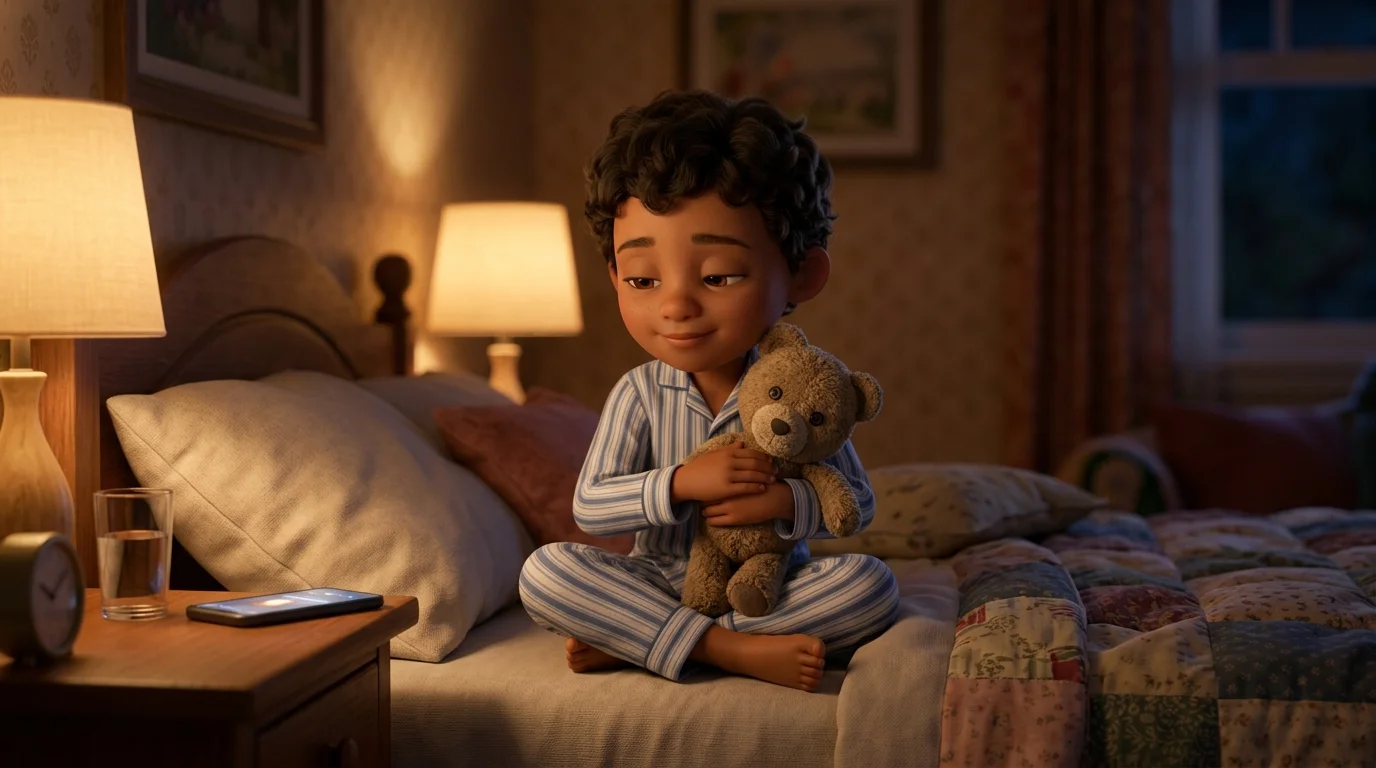
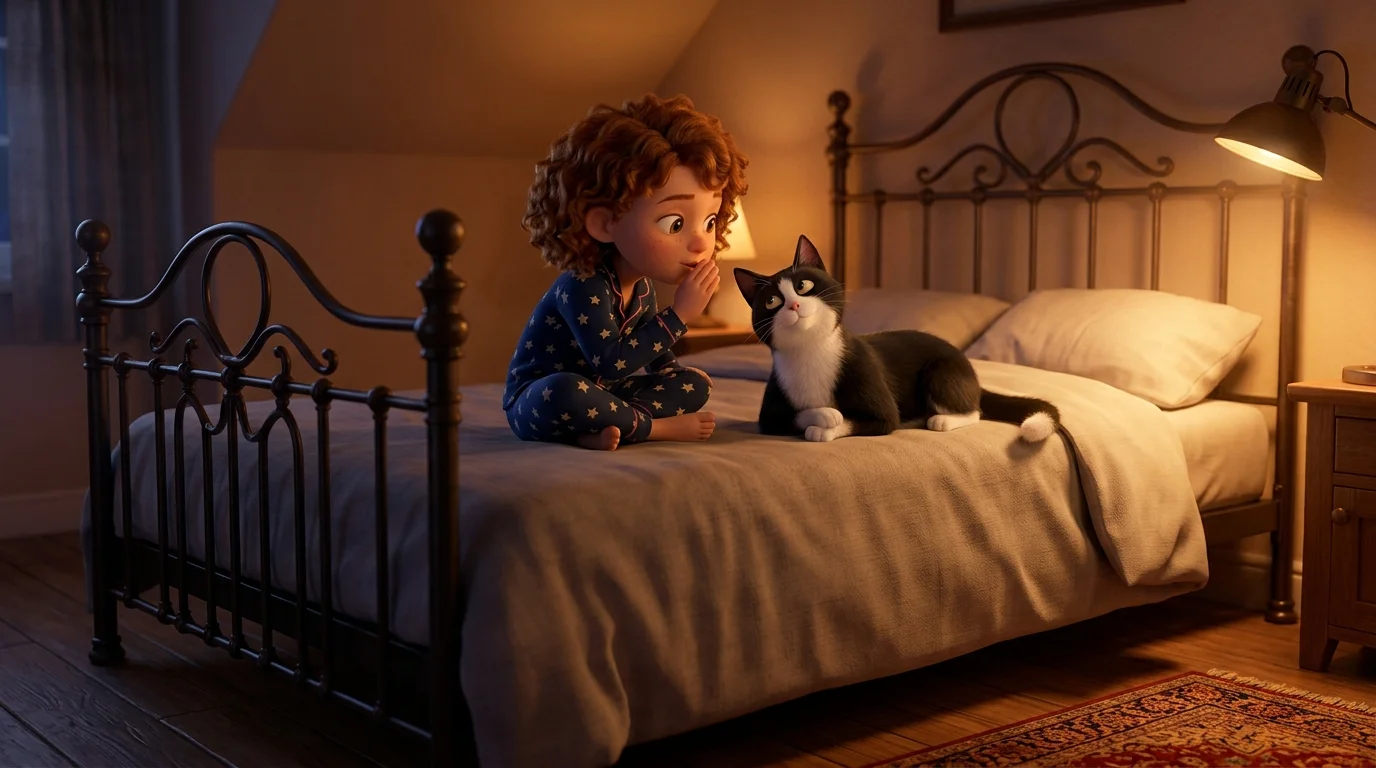
It is 8:12 in the evening. Your child has slipped under the covers, one arm hanging off the edge of the bed so the cat has a clear invitation to climb up. The cat knows. It steps up, turns twice, settles in. The purring starts before you have even opened the book. You know this scene. The family cat is part of the bedtime ritual as surely as the night light and the last sip of water. That is exactly why dropping your cat into a personalised story changes everything for your child: they are no longer just falling asleep next to their animal, they are falling asleep inside a story where their animal has a role.
Why the cat belongs in a personalised story
The cat is not a decorative detail in your family life. For your child, the cat is often the first witness of the day, the one sleeping on the forgotten jumper, the one sitting on the homework, the one waiting outside the bathroom door. When your child hears their own first name read aloud in a personalised story, and then hears the cat's name in the very next sentence, the anchoring effect is unmistakable. The story stops being external fiction. It becomes a soft extension of home.
That effect lands even harder than with a dog, because the cat occupies a place in the bedroom that very few other beings occupy: it sleeps there, it watches there, it moves through the night there. Your child's imagination has already projected intentions, secrets, silent conversations onto the cat. A personalised story simply brings to the surface what your child was already thinking quietly. Animal welfare bodies such as the RSPCA cat advice pages and the ASPCA cat care section emphasise how strongly the bond between a child and the household cat shapes daily emotional life.
If you have already read our companion article on how to put your dog in a bedtime story, you will notice that the cat's role is very different. The dog goes off on quests, runs, fetches. The cat stays, observes, guesses. This distinction is worth knowing before you start building the story.
Three narrative roles where the cat shines
The watcher cat
This is the role that works best for children who are a little afraid of the dark. Here, your cat is cast as the guardian of the bedroom. It watches the shadows, listens to the corridor, makes sure nothing unsettling crosses the door. Your child feels protected not by an abstract character, but by their own cat, the one truly next to them while they listen to the story. This works beautifully in a family-themed or gentle fantastical story, where the stakes are not a threat but a calm presence keeping watch.
The cat partner in mystery
This is the favourite role for children aged 5 to 8. The cat sees in the dark, slips through every gap, knows how to open doors that were thought shut. In a mystery story, the cat becomes the perfect investigation companion. While your child hero follows the trail, the cat goes ahead, pauses, mews softly to point the way. This role lifts the child up: it is the child who solves the puzzle, but it is the cat that helped them see what the grown-ups had missed.
The household companion cat
This is probably the most underrated role and quietly the truest. The cat has no mission. It is not chasing anything. It is simply there, on the cushion, on the pillow, on the folded blanket. Its mere presence in the narrative is enough. This setup works very well for family stories or for a tender comedy where the comic spark comes precisely from the cat's sovereign indifference to the child's adventures. Do not underestimate the power of this role: a child loves recognising their cat exactly as it is, without forcing it into an adventure that does not match its nature.
How to describe your cat to Nanou
The rule is simple: the more detail you give Nanou, the stronger the recognition will be for your child. Here is what matters.
- The exact name. Whiskers, Pumpkin, Mittens, Salem, Luna, Biscuit. Type the name exactly as you use it at home, with the spelling your family knows. That is the name the voice reading the story will pronounce, and it is the name that will trigger immediate recognition for your child.
- The coat. Grey tabby, black and white, ginger, blue-grey, tortoiseshell, white with black patches. Be precise. A tabby cat is not a ginger cat, and your child knows this better than anyone.
- The dominant character trait. Calm, playful, shy, fly-hunter, purring, aloof, clingy. One trait is enough, but choose it well. That trait will guide how Nanou writes the cat's role in the story. A timid cat will not be the bedroom watcher, it will be the cat to whom the hero must give courage. A hunter cat will be the mystery partner who sniffs out the clues.
You can also mention a recognisable habit: sleeps on the washing machine, always shows up when the fridge opens, hates rustling plastic bags. One well-placed habit and the child bursts out laughing, recognising the family in the story.
A note: Nanou lets the child hero appear as a 3D portrait based on a photo. For the cat it is different: no photo to upload, just your written description. The cat will appear in the scenes rendered in 3D from the details you provided.
A concrete pitch: Leo, age 6, and Whiskers
Leo, age 6, lives with his grey tabby cat named Whiskers, a curious type, always sleeping at the foot of the bed. One evening, Leo hears a sound coming from the attic, right above his bedroom. Whiskers lifts his head, ears upright. He jumps off the bed, walks to the door, mews softly, waits. Leo gets it: he has to follow.
In the next scene, illustrated in stylised 3D, we see Leo in his pyjamas, torch in hand, climbing the attic stairs behind Whiskers. The cat moves forward with confidence. He knows. The attic door swings open, almost on its own. Inside, soft silhouettes appear in the half-light.
Whiskers walks closer, gently taps one of the silhouettes with his paw. It is an old teddy bear, forgotten up there for years. Next to it, a plush giraffe, and further along a worn little rabbit. Leo recognises his earlier soft toys, the ones he thought were lost. Whiskers rubs against the bear as if to say: they are safe, they were waiting for you.
The final scene: Leo back in bed, bear in his arms, Whiskers already purring against his stomach. The story closes on a close-up of the cat, eyes half shut, in calm guardian mode. Three scenes, a gentle build, a reassuring resolution, the cat at the heart of the story without overplaying it.
FAQ
My child has several cats at home. Can they all appear in the story?
Yes. You can name and describe each of them. Either they all show up as a small tribe of supporting cats, or you pick one main cat and the others stay in the background of the home. For a personalised story of 3 or 6 scenes, one central cat holds the role better, but you make the call.
Our cat passed away recently and my child still talks about him. Is it a good idea to cast him?
It can be, handled with care. A personalised story can serve as a gentle tribute, with the cat present as a household companion or a kind watcher. Avoid high-octane adventure for that particular story: a calm, luminous role will work better as a way to walk alongside your child.
My cat is very shy in real life. He would not make a good hero, right?
On the contrary. A shy cat is an excellent character, because it lets the child hero play the protective role. The child reassures the cat, shows the way, proves there is nothing to fear. It is hugely empowering for a child to become the brave one for their own animal.
Can I download the story to print it?
Yes. Every story you create on Nanou can be downloaded as a print-ready PDF you can print at home or at a shop. Your child's cat appears in the PDF exactly as in the version read aloud by the app.
Create the story tonight
Your cat is already there, on the bed, waiting for you to start reading. Give the cat a role in the story. Describe it precisely, pick a genre that matches its nature, let Nanou write the scene. Your child will hear the cat's name in the voice that reads the story, and they will understand immediately that this story was made for them.
Start creating now on Nanou Studio.