The evening your child stops wanting to sleep
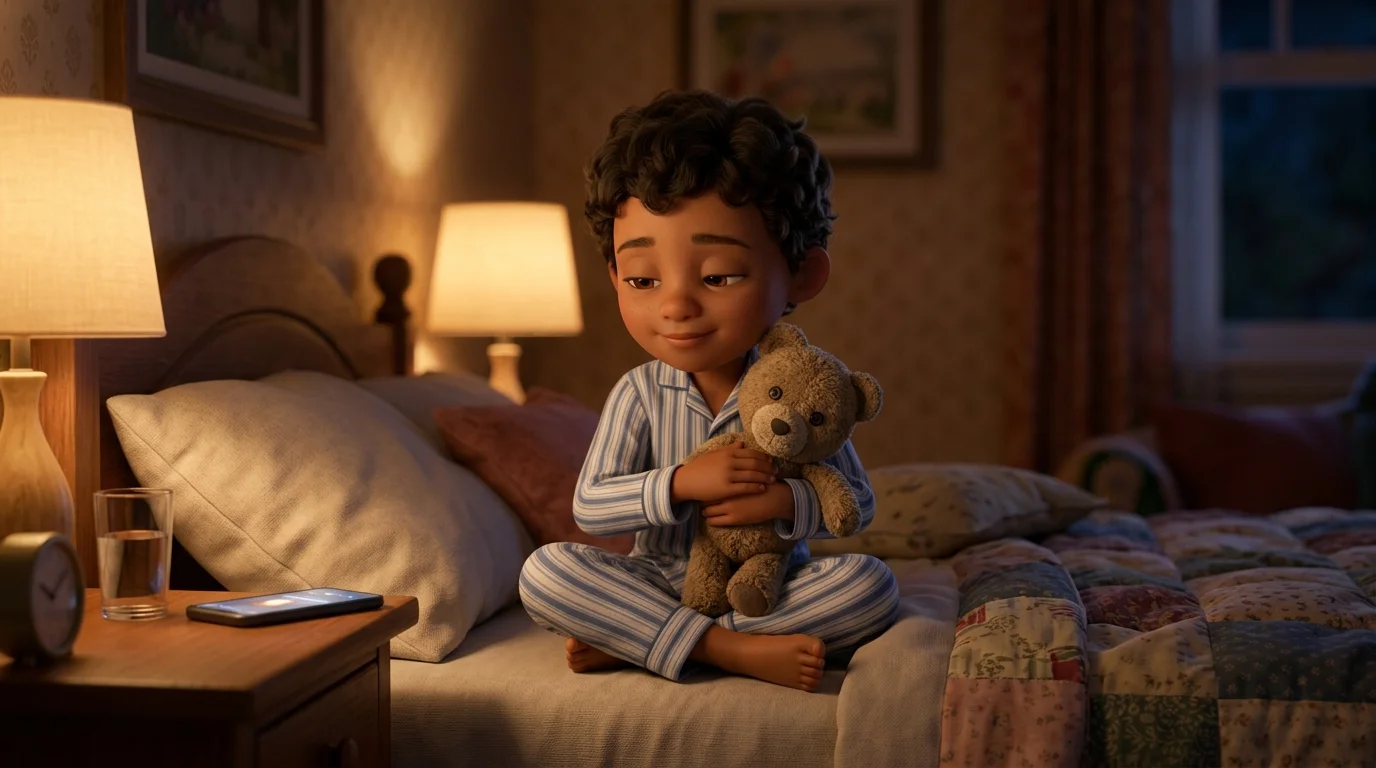
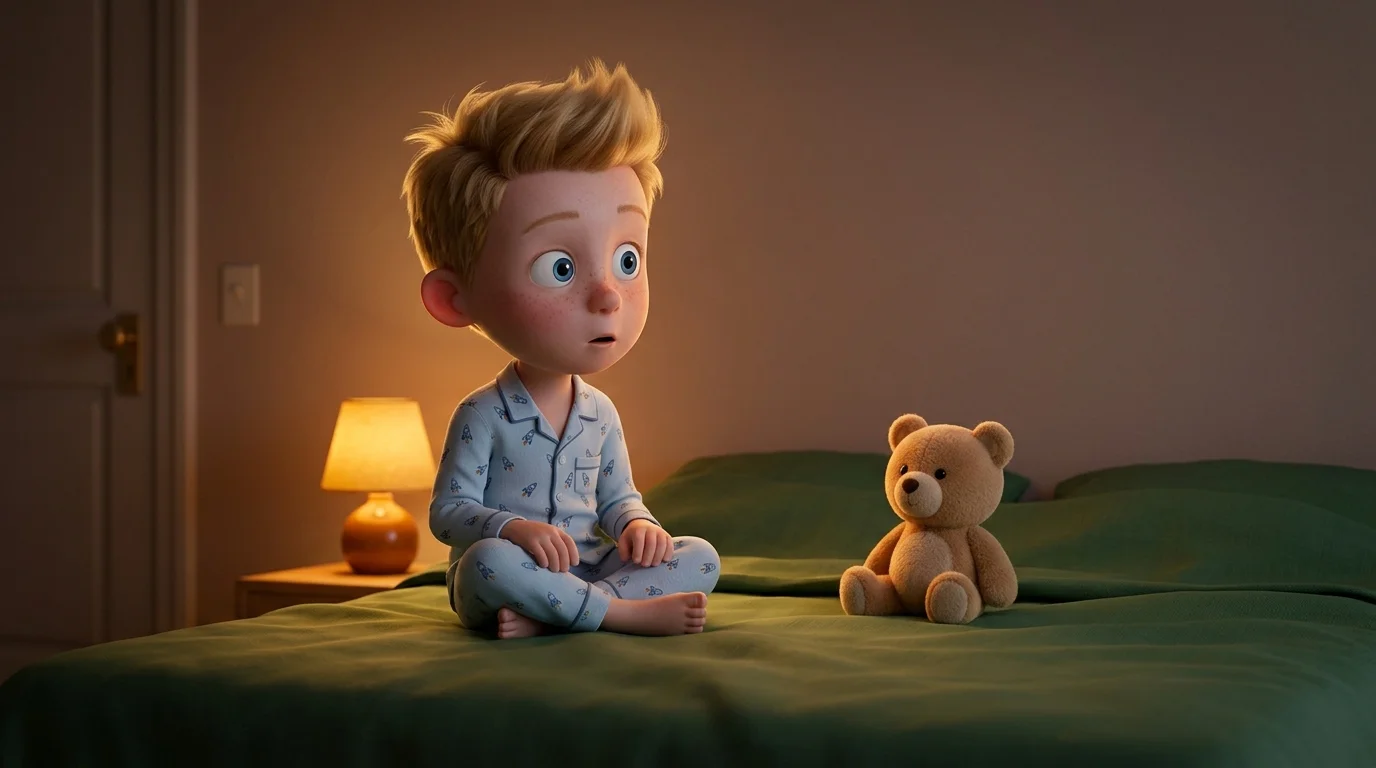
It is half past eight, the bedtime story has just ended, you have turned off the main light, and your child reopens the conversation as if nothing had happened. "I am thirsty." "I forgot to tell you something." "I want to tell you about my day." "I do not want to sleep." At that precise moment, the parent in you has already finished their day, and the prospect of another hour of hallway negotiations holds zero appeal. This guide gives you five concrete levers to turn the bedtime fight into a gentle drift off, and explains how a well-tuned personalised story can do the heavy lifting on the nights when nothing else works.
Why a child refuses to sleep
A child's refusal of sleep is rarely an isolated tantrum. Most often it is the convergence of three factors: a normal push for autonomy, a diffuse separation anxiety, and a stimulation debt built up across the day (screens, sport, multiple transitions). The American Academy of Pediatrics resources on healthy sleep habits remind parents that between 2 and 8 years, bedtime resistance is one of the most common reasons for consultation and that it is almost always treated by adjusting the routine, not by firmness alone.
Two very different situations need to be told apart. First case, your child does not want to go to bed. The fight unfolds in the living room, in the bathroom, on the stairs. Second case, your child is in bed but will not fall asleep, they call out, they get up again, they cry. These two phases call for different responses, but they share a common feature: a short, predictable and soothing ritual works better than a string of reminders.
Five concrete levers that actually work
To take back the evening without turning each night into a battle, here are five levers that work for most children between 2 and 8 years.
- Move the routine earlier rather than longer. If your child takes an hour to fall asleep, shift the story and the night light thirty minutes earlier. The natural sleep onset window moves with the routine, not with accumulated tiredness.
- Cut screens one hour before bedtime, no exception. Blue light delays melatonin production and a cartoon excites the nervous system far more than people realise.
- Lock the last half-hour on three invariant steps: pyjamas, teeth, story. Always in this order, always in the same room, always with the same light intensity.
- Choose a calm story and personalise it. At that exact moment, your child must be able to identify with the hero without excitement, without twists, without sustained suspense. A generic story works, but a story where your child is named hero cuts real sleep onset roughly in half.
- Leave the room gently without dramatising the separation. No "you are a big kid, you sleep alone tonight" which adds pressure. Just a short kiss, a ritual sentence ("I love you, see you in the morning") and the door closing without noise.
Child sleep is well documented on the pediatric side. The page on healthy sleep habits lists indicative durations by age and the warning signals. If sleep refusal persists more than three weeks with daytime impact (irritability, drowsiness at school), talking to your pediatrician is the right move.
Why a personalised story makes the difference
A generic story puts forward a hero your child does not know, in a world they have never seen. The attention demands a projection effort, sometimes pleasant, sometimes exhausting after a long day. A personalised story does the opposite: your child meets their own first name, their bedroom, their dog, their best friend, their cuddly by its real name. The cognitive load drops, the nervous system loosens, sleep settles in faster.
With Nanou Studio, you compose the story in a few clicks with the everyday building blocks of your child's life. The hero carries their first name and their face rendered in stylised 3D. School friends can appear as secondary characters. The dog Splash sniffs the trail, the cuddly Bunny whispers, the preschool teacher hands out a small mission. That density of familiar markers is precisely what turns a story into a gentle sleep aid.
The format matters too. Three scenes for ages 2 to 4, six scenes from 5 onwards. No more, no less. Beyond that, attention re-ignites and the soothing effect reverses. A story that is too exciting (chase, villain, suspense) wakes the child up instead of putting them to sleep. Stick to simple missions: a missing cuddly, a star to find again, a kiss hiding in the house.
Browse family stories and personalised adventures to dial in the right tone without rewinding your child who is already resisting sleep.
The routine step by step, from dinner to sleep
An evening routine that works fits in forty-five minutes, watch in hand. Here is the standard sequence, to adapt to your child's age.
- Calm dinner, no screen, no tablet at the table, ever.
- Half an hour of free play in the living room, lights already dimmed.
- Short bath or shower, calm voice, parents almost whispering.
- Pyjamas in the bedroom, not in the bathroom.
- Teeth brushing, two minutes flat, standing at the sink.
- Personalised story in the bed, single light from an amber night lamp.
- Brief kiss, ritual sentence, door closed without noise.
This sequence avoids three classic traps. It does not leave the child managing the transition alone. It limits room changes that re-stimulate attention. And it places the story right before the separation, so at the moment where its soothing effect is highest. The voice reading the story takes over, all you have to do is sit beside the bed.
Remember the print-ready PDF option. Once your story is generated, you can download it as a PDF and print it at home. Very useful on nights when your child wants to turn the pages themselves rather than listen to the narrated voice. The same story, on paper, can keep reassuring for weeks.
A concrete pitch for the child who resists
Picture your child, first name Camille, five years old, in reception. Their cuddly is Bunny, their dog is Splash. Tonight's mission: Bunny has lost his goodnight kiss, it must be found before the whole house falls asleep.
- Scene 1 · Camille notices Bunny looks sad, the goodnight kiss has slipped somewhere in the house.
- Scene 2 · Splash sniffs the trail along the hallway rug, his paws landing in silence.
- Scene 3 · First find, the kiss has passed through the kitchen.
- Scene 4 · Splash and Camille follow a soft trace all the way to the living room sofa.
- Scene 5 · Camille finds the kiss tucked behind the cushion, Bunny smiles again.
- Scene 6 · Back to bed, Bunny gets his kiss, Splash gets his, Camille closes their eyes and the house gently goes to sleep.
Reassuring ending, lights down, sleep arriving. The structure also works on a missing cuddle, a lost plush star, a sock that ran away from the cuddly toy. Your child recognises it, anticipates it, and that very anticipation of the familiar ending is what helps them let go.
Frequently asked questions
From what age should I worry about a child who will not sleep?
Sleep refusal is common between 2 and 8 years and is not pathological as long as it stays temporary. If the daytime impact lasts more than three weeks (irritability, drowsiness at school, loss of appetite), discuss it with your pediatrician.
My child gets up ten times after the story, what do I do?
The best move is to bring them back without drama, no dialogue, no new story. A short sentence, a kiss, back to bed. Repeating that gesture without added emotion extinguishes the strategy in a few evenings.
Is a personalised story really more effective than a classic one for sleep?
For most children, yes. The density of familiar markers (first name, bedroom, cuddly, friend) lowers the cognitive effort and speeds up falling asleep. But it does not replace a short and steady ritual around the story.
Can I keep the same story for several evenings?
Yes, and it is even recommended. Repetition deeply reassures children between 2 and 6 years. The more your child knows the ending, the more it soothes them, because they anticipate the moment of sleep.
Start the story that will finally help your child drift off
You have the bedroom, you have the cuddly, you have the dog, you have the first name. The only missing piece is the story that closes the day. Nanou Studio handles the text, the 3D rendering and the narrating voice in a few minutes, all you have to do is press play at bedtime. Create your first personalised story on Nanou Studio and give your sleep-resisting child an evening companion who speaks their language, night after night.