Putting your dog in the bedtime story (and what changes when the family pet steps in)
For your child between 2 and 8, the dog (or the cat, the rabbit, the hamster) isn't a background character in the house. It's a full family member, often a confidant, sometimes a protector, sometimes a partner in mischief. Pulling the pet out of the scenery and putting them at the center of the action validates something your child already believes. This article explains why it changes the bedtime ritual, how to actually do it, and what works at which age.
Why a family pet changes the bedtime story
Three narrative mechanics that unlock the moment you invite the pet into the story.
The silent witness. The animal sees what the adults don't. They follow your child up to the attic, into the backyard, under the bed. They implicitly validate what the kid hero is going through, without the kid needing to justify anything. That's powerful at 4 to 6, the age when "nobody believes me" starts to take up real space.
The adventure sidekick. The dog tags along, sniffs, alerts. They're not the main hero, but without them the kid hero wouldn't make it through. The loyal ally, lending courage just by being there. Especially effective in adventure and mystery stories.
The full co-hero. Two protagonists, two personalities, the pet solves part of the problem thanks to their animal nature (smell, jumping, stealth). The dog knows something nobody else does, and it's the dog who breaks the story open. A lever kids 6 to 8 love.
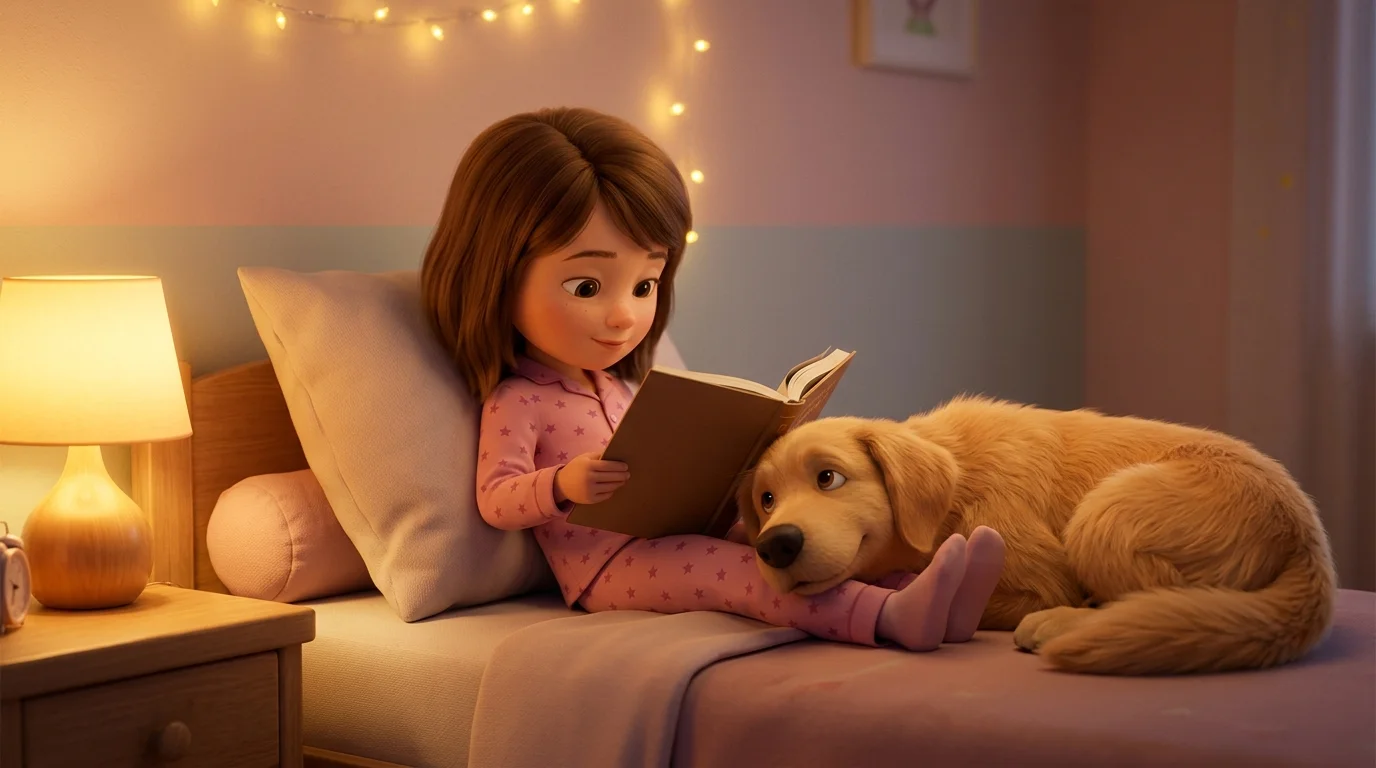
What this brings to the bedtime ritual: a stronger emotional anchor. The child who hears their dog (by their real name, with their real breed, with their actual quirks) join an adventure goes to sleep feeling seen as part of their whole extended family, not just as a kid character.
How the pet joins the cast of a personalized story
Three things separate a background pet from a pet truly in the cast:
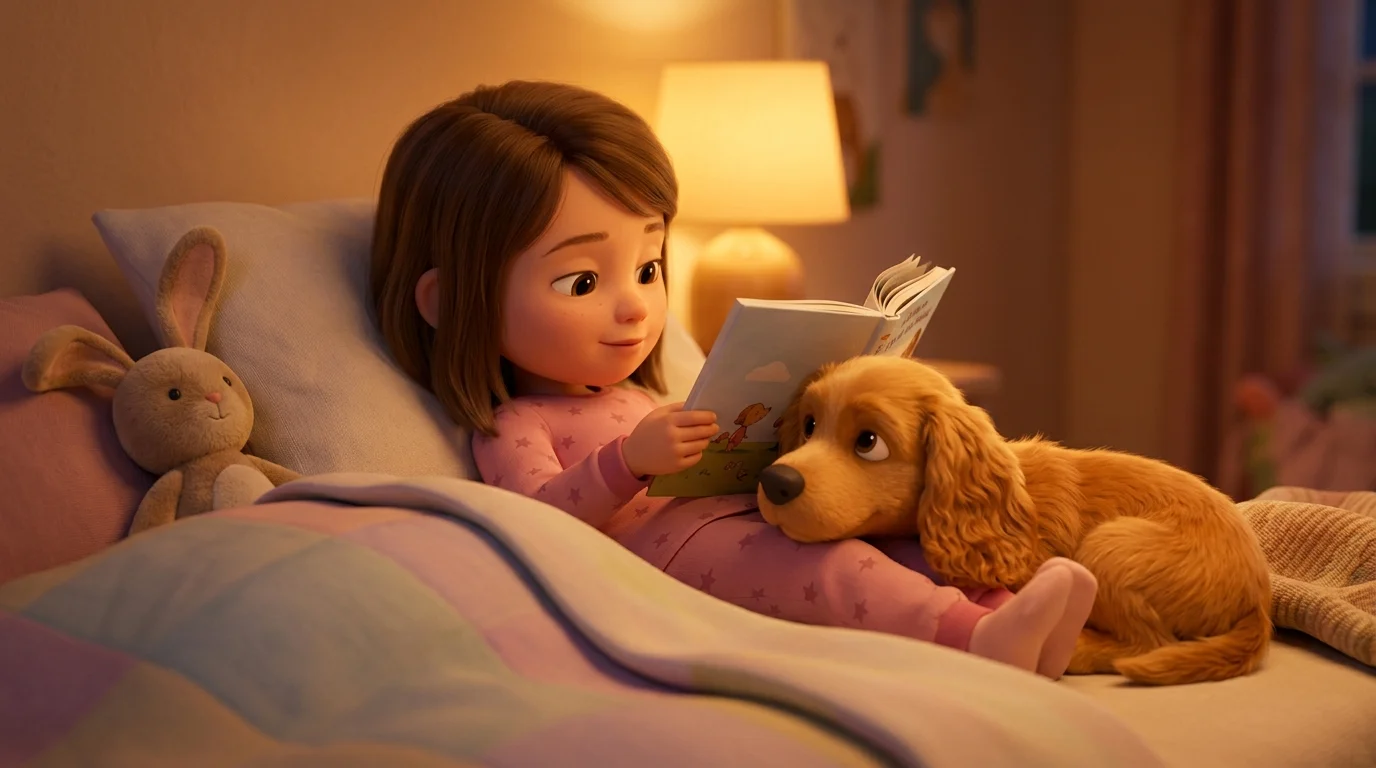
- Their real name. Not "the dog," not "their dog Rover the generic." If their name is Biscuit, Bandit, Noodle, Daisy, that's the name that appears in the narration. Your child doesn't identify with an anonymous dog, they identify with Biscuit.
- Their real breed or size. A beagle, a poodle, a tabby cat, a dwarf rabbit. The visual rendering changes everything. If your dog is a mix, a descriptive word is enough: a long-haired light-brown dog, a small dog with floppy ears.
- A quirk or a habit. Something that belongs to your pet specifically: they always sleep on the living-room rug, they're scared of plastic bags, they steal socks. That detail, slipped into the story, makes your child say "that's exactly like at home!" It's the magic moment of personalization.
What sets Nanou Studio apart here: you enter these three elements once, in your family's cast, and every story afterward reuses them. You enter it once, not every time you create a story. Build your family's cast.
Three story pitches that work especially well with the dog
"The Night Biscuit Disappeared" · mystery theme
Biscuit was sleeping on the rug like every night. In the morning, the rug is empty. Your child sets out to find them, through the house, the yard, the neighbor's place. Each room reveals a clue: an upturned bowl, a hair on the couch, a muddy paw print. At the end, Biscuit is found in an unexpected spot, and the child figures out why. Ideal for kids 5 to 8 who love solving simple puzzles. Browse the mystery theme on Nanou Studio.
"Biscuit and the Great Expedition" · adventure theme
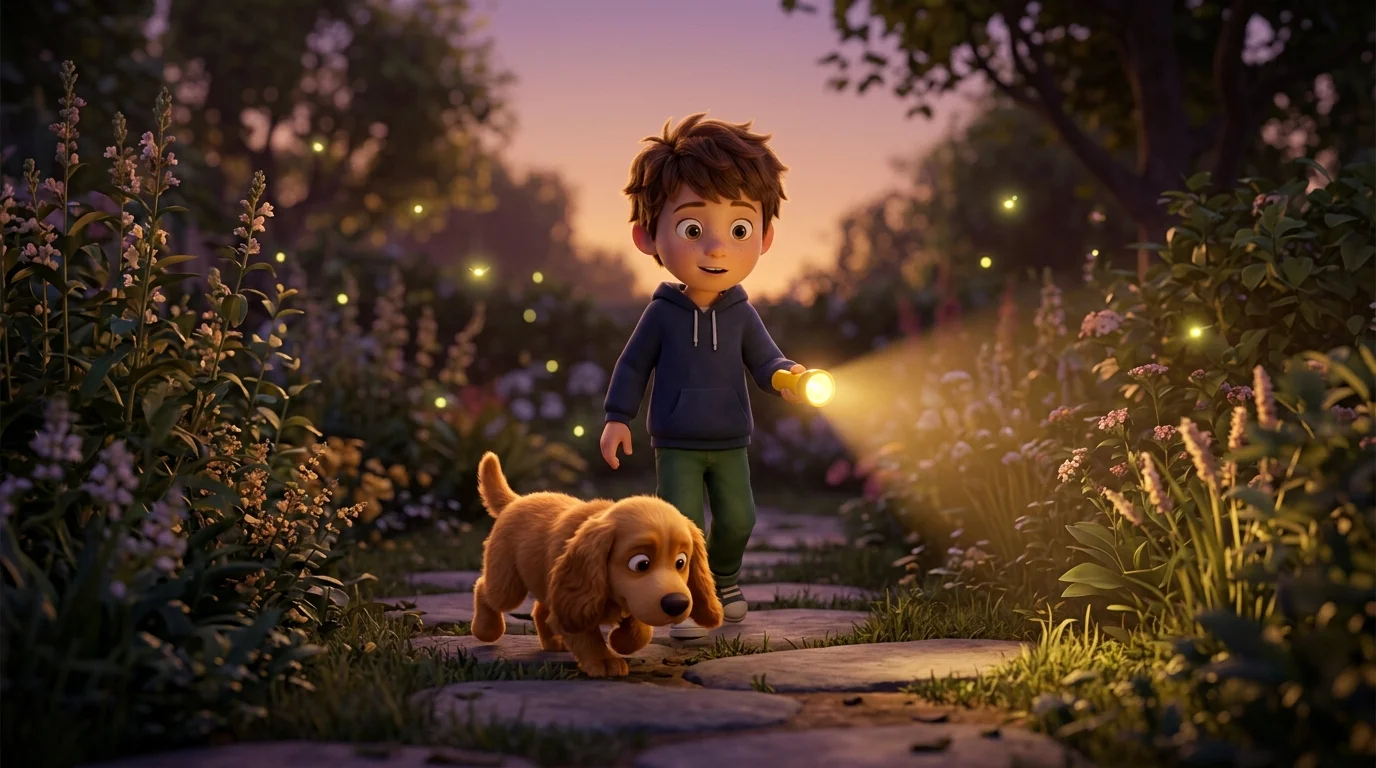
Your child and Biscuit set off on a mission in the backyard, which turns into a mysterious forest. Biscuit sniffs out the path, your child follows behind, and together they uncover a treasure (an old tennis ball lost in the bushes, a secret tucked under a rock). The dog is the ally without whom none of it would have happened. Ideal for 4 to 7-year-olds who love exploring. Browse the adventure theme on Nanou Studio.
"The Biscuit and Me Super-Squad" · superhero theme
Your child discovers that Biscuit has a special power: they can sense when someone is emotionally low and bring them a soft object. Your child and Biscuit form a team that helps the neighbors, classmates, Grandpa who lost his glasses. Ideal for empathetic kids who love seeing themselves help others. Browse the superhero theme on Nanou Studio.
And for other pets: cat, rabbit, hamster, goldfish
The mechanism works the same, with a few personality adjustments depending on the animal:
- The cat brings more mystery than the dog. They have their own logic, don't necessarily follow the hero, can vanish and reappear without warning. Excellent material for mystery and fantasy stories.
- The rabbit is calmer, more contemplative. They fit gentler stories, evening narratives where you're trying to soothe rather than fire up before bed. Ideal as a story companion for 2 to 4-year-olds.
- The hamster is unpredictable and accidentally funny. Suits comedy stories, where their hyperactivity creates silly situations. Slip them into stories for 3 to 5-year-olds who love a laugh before sleep.
- The goldfish is harder to make a hero, but they can be a silent confidant in the bowl who listens to the child's secrets. A detail to drop in rather than a center character.
How much it costs to put your dog in every story
Zero, with Nanou Studio. You add them once to your account's cast, and every story afterward includes your dog at no extra cost, unlimited within your subscription. No re-entering each time.
Compare with a custom hardcover photo book from a personalization publisher: $30 to $60 per book, plus shipping, plus 8 to 21 days of production. And the pet often shows up as a stylized pictogram, not a faithful representation.
And every Nanou story is automatically available as a printable book (a ready-to-download PDF). You can keep paper copies of your child's favorite stories, without depending on a publisher.
Create your first story with your dog in the cast
Frequently asked questions
My child is scared of dogs. Should we still put ours in the story?
If the dog is part of the household and the fear targets unfamiliar dogs (not yours), yes, it can actually help your child come to terms with their relationship to the animal by seeing themselves interact positively with them in the story. If the fear is generalized and includes your own dog, better to start with pet-free stories and add the dog later, once the fear softens.
What if we have two dogs, do we put both in?
Yes, it's actually a narrative asset. Two pets in the cast unlock dynamics of teamwork, chase scenes, sibling-style banter. On the other hand, three pets or more risk overloading the story and diluting identification. We recommend one or two pets max in a personalized story's cast.
Does Nanou Studio actually draw my dog or a generic one?
The rendering illustrates your dog based on their traits (breed or type, dominant color, size, quirks). It's not a photographic portrait pixel for pixel, it's a stylized 3D rendering that stays recognizable. Many kids spot their dog at first glance, especially if you've entered the breed accurately and one distinctive detail (drop tail, eye patch, etc.).
Does the dog appear in every scene?
No, and that's intentional. If the pet is in every scene, they become background noise rather than a character. Nanou spreads the pet across the scenes that matter (usually 3 to 5 scenes out of 6), with moments where they're central and others where they're in the background. That's what creates rhythm and holds your child's attention.
In short
Putting your dog in the bedtime story isn't a gimmick, it's a stronger identification mechanism for your child. It works all the better when you enter the real name, the real breed, and one distinctive detail of your pet. Three narrative levers unlock the use (silent witness, adventure sidekick, full co-hero), and three concrete pitches (mystery, adventure, superhero) land especially well.
If you want to try it with your real dog in the cast, the first story is free on Nanou Studio, no credit card required.