The last morning before the long summer
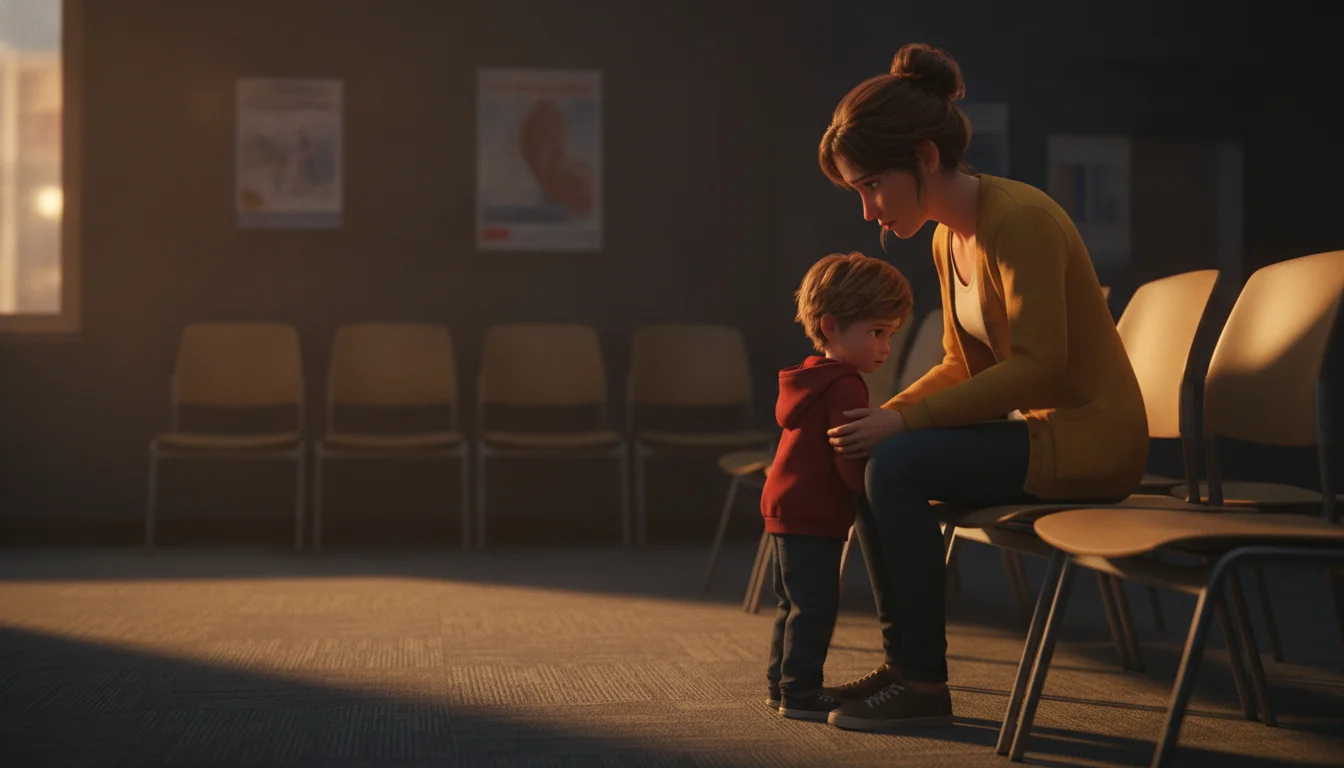
Eight twenty in the morning, the last Friday before the break. Your child picks up the backpack, mutters "it's the last day I'm going to see Tom," and the face freezes. On the doorstep, you realize they have just understood something big: the summer that pulls them apart, the class reshuffle in September, sometimes even a move. This guide gives you five concrete levers to support that first real friendship separation, and explains how a personalized story told that very evening can turn goodbye into a promise.
Why this first separation marks children so deeply
For many children, it is the first grief of a daily friendship. For ten months they have shared the playground, the canteen, the giggles at recess, sometimes the same desk. And suddenly the ritual stops. The American Academy of Pediatrics, on healthychildren.org reminds us that the loss of a daily relational anchor triggers in a child a very real anticipatory sadness, sometimes mistaken for an end-of-year tantrum. It is not a tantrum: it is a first lesson in absence. Putting it into words is part of your job as a parent.
Five concrete levers for living the goodbye
- Name the emotion without minimizing it. "You are going to miss Tom, and Tom is going to miss you, it is okay to feel sad." Avoid "no big deal, you'll see each other again soon."
- Trade a symbolic object. A drawing, a beaded bracelet, a painted pebble. The object makes the friendship tangible even when the friend is far away.
- Plan the next meeting when possible. A date in August on the bedroom calendar, even approximate, changes everything.
- Write a letter or draw a picture to give on the last day. A child who acts on sadness moves through it better than one who simply endures it.
- Tell a personalized story about lasting friendship, where the hero, your child named, and the best friend named, live through the goodbye and imagine their reunion.
Why a personalized story makes the difference
A generic story tells of an anonymous child saying goodbye to an anonymous friend. A personalized story names your child, names the best friend, situates the scene in their school, mentions the drawing they swapped. With Nanou Studio you compose the story in a few clicks: hero's first name, friend's first name, school or playground, traded object. The narrated voice takes over and the friendship becomes something durable, magnified by the story. Your child falls asleep knowing their friendship exists beyond the playground.
A story that celebrates friendship and family
Childhood friendship is a family affair in the broadest sense: a best friend is almost a chosen cousin. Explore the family stories to prepare the goodbye evening, or browse other tales that celebrate the bonds that survive distance.
A concrete six-scene canvas
Picture your child, first name Saxa, age 6, saying goodbye to their best friend Tom on the last day of school. They have shared the same class since first grade. The mission: Saxa lives the last day, swaps a drawing with Tom, and falls asleep knowing the friendship continues.
- Scene 1 · Saxa arrives at school, knowing it's the last morning, holds Tom's hand a little tighter than usual.
- Scene 2 · In class, Saxa draws a sun and a promise for Tom, Tom draws a boat for Saxa.
- Scene 3 · At recess, the two trade their drawings, promise to think of each other every summer evening.
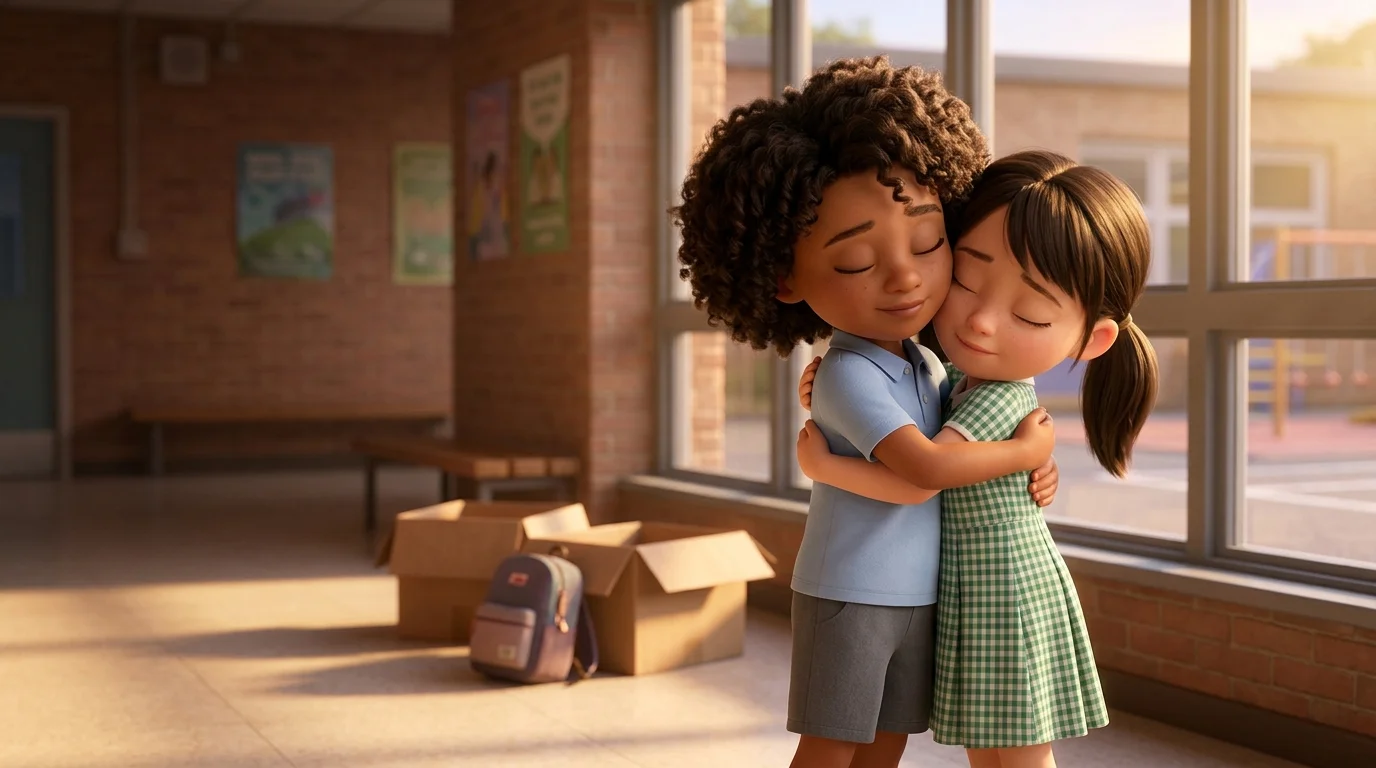
- Scene 4 · After school, Saxa gives Tom a big hug, Tom's mother waits in the car.
- Scene 5 · Saxa walks home, pins Tom's boat above the bed, already imagines the new school year.
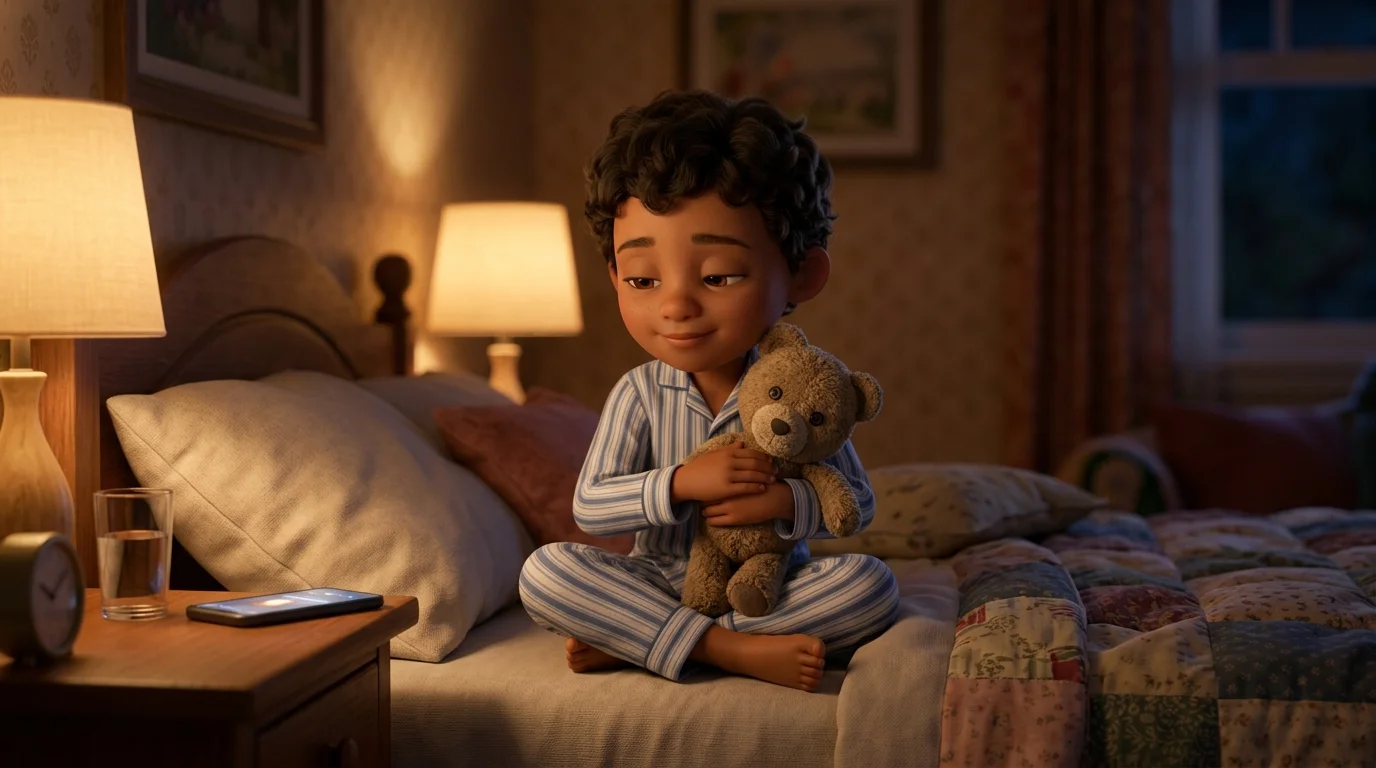
- Scene 6 · At bedtime, Saxa falls asleep, Tom's drawing in view, the friendship intact, settled in place.
Frequently asked questions
Should you dramatize the separation or play it down?
Neither. Name the emotion without inflating it. "You feel sad because Tom is going to miss you, that's a real ache." A child needs to be heard, not forcibly reassured nor convinced it is nothing.
At what age does this emotion appear?
Most often from age 4 or 5, when a child identifies a specific best friend. Before that, bonds are more fluid. Between ages 6 and 9, the separation can be felt as a genuine loss, especially in case of a move or change of school.
Should parents exchange contacts to keep the children in touch?
If it is feasible, yes, it is an enormous gift. A video call in August, a postcard sent, and the friendship holds. If it is not possible, the symbolic object and the personalized story carry the load.
How long should the bedtime story be?
Three to six scenes, that is five to ten minutes of narration. Long enough to install the friendship inside the tale, short enough for the child to slip into sleep before the end.
Prepare the story that turns goodbye into a promise
You have the child, you have the best friend, you have the traded drawing. What you are missing is the story that gives this friendship its rightful place. Create the first goodbye story on Nanou Studio.