The morning after the big wave, your child refuses to go back to the beach
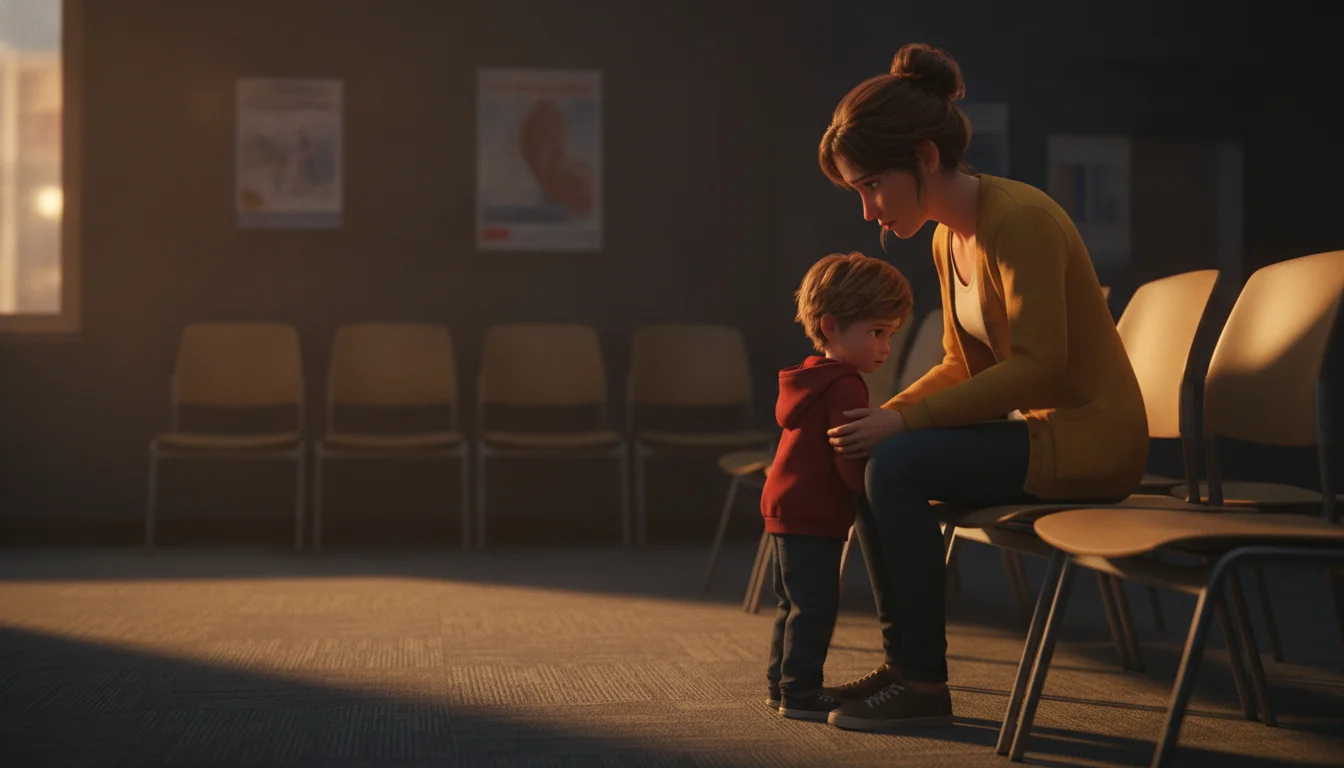
Ten in the morning. The towel is spread on the sand, the bucket is waiting for its water, the cousins are already knee-deep in the surf. Your child is clinging to your leg. Yesterday, a wave bigger than the others knocked them over, they swallowed a mouthful of salt water, they cried for half an hour, and since then they refuse to step past the foam line. You know this beach, they know this beach, it is not a first visit. It is a brand-new fear, installed in three seconds of tipping. This guide gives you five practical levers to walk them back to the water without forcing it, and explains why a personalised bedtime story, where the hero learns to read the ocean, turns fear into a skill.
Why fear of waves is normal and often installed in a single experience
A wave of sixty centimetres reaches an adult's knee. For a four-year-old who stands one metre tall, it is a wall of water hitting chest height, knocking them down, tumbling them, filling their nose and mouth in a single second. The American Academy of Pediatrics on HealthyChildren.org reminds us that losing bodily orientation in water triggers a powerful alarm response in children, even more so when it arrives without warning. Add the roar of the surf, the sting of salt in the eyes, the pull of the backwash, and every ingredient is there for a scale trauma. This is not fragility, it is a response proportional to what the body just lived through. Good news: this fear unwinds quickly when the return is not forced, and when the child is handed back the controls over their own body facing the ocean.
Five practical levers to tame the wave
- Come back to the sand first, not the water. Spread the towel ten metres away from the wet line, build a sandcastle, let your child watch the waves with no obligation to enter. They look, they comment, they reconnect with the setting.
- Explain the mechanics of a wave in words. A wave rises, it rolls, it flattens, it pulls back. It comes, it goes, it comes, it goes. Naming the rhythm defuses the unpredictable. Your child understands a wave does not stay standing, it passes.
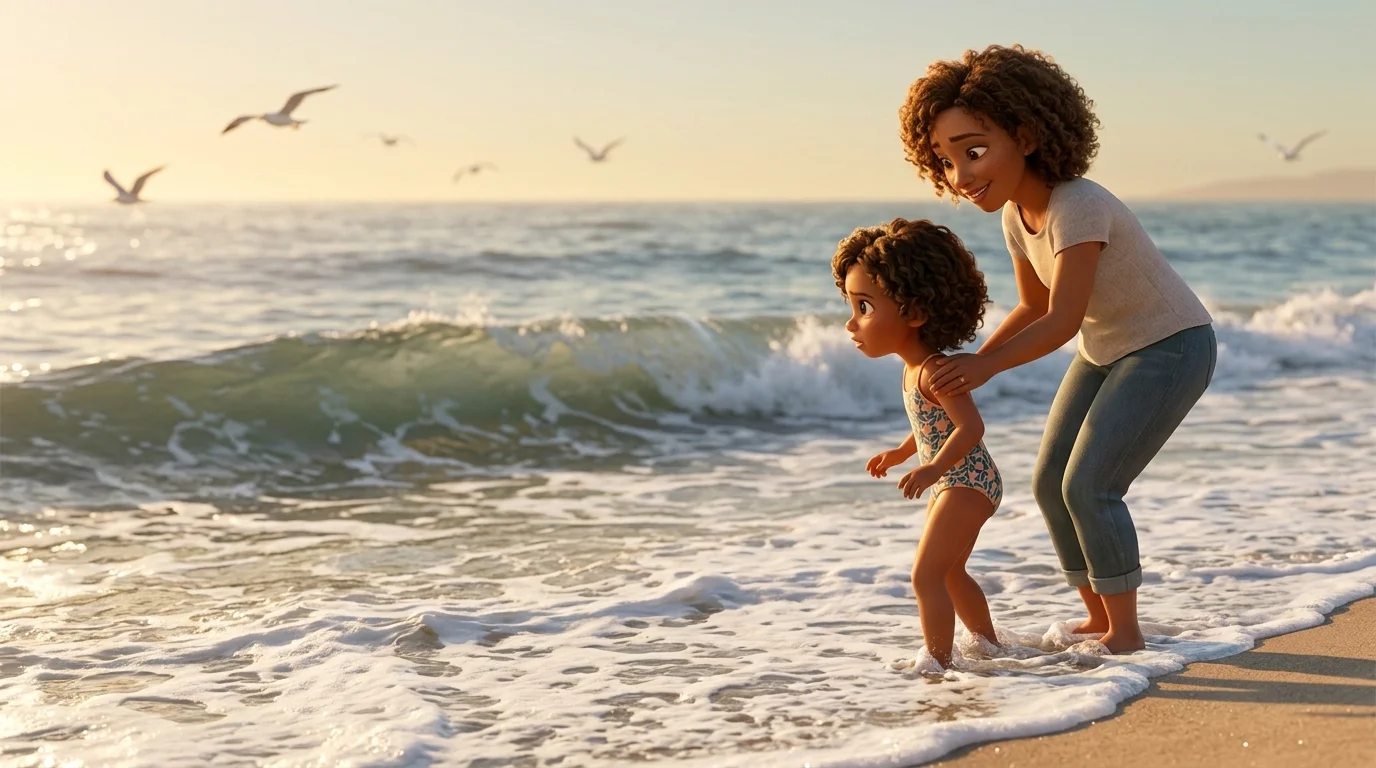
- Hold their hand for the first re-entry, at the foam line. Not knee-deep, not thigh-deep, just where the water licks the toes. Two minutes of that contact confirms they can choose to step back any time.
- Play at counting waves before taking a step forward. One, two, three, we step. One, two, three, we step again. The game gives your child the controls: they trigger the step, not the wave.
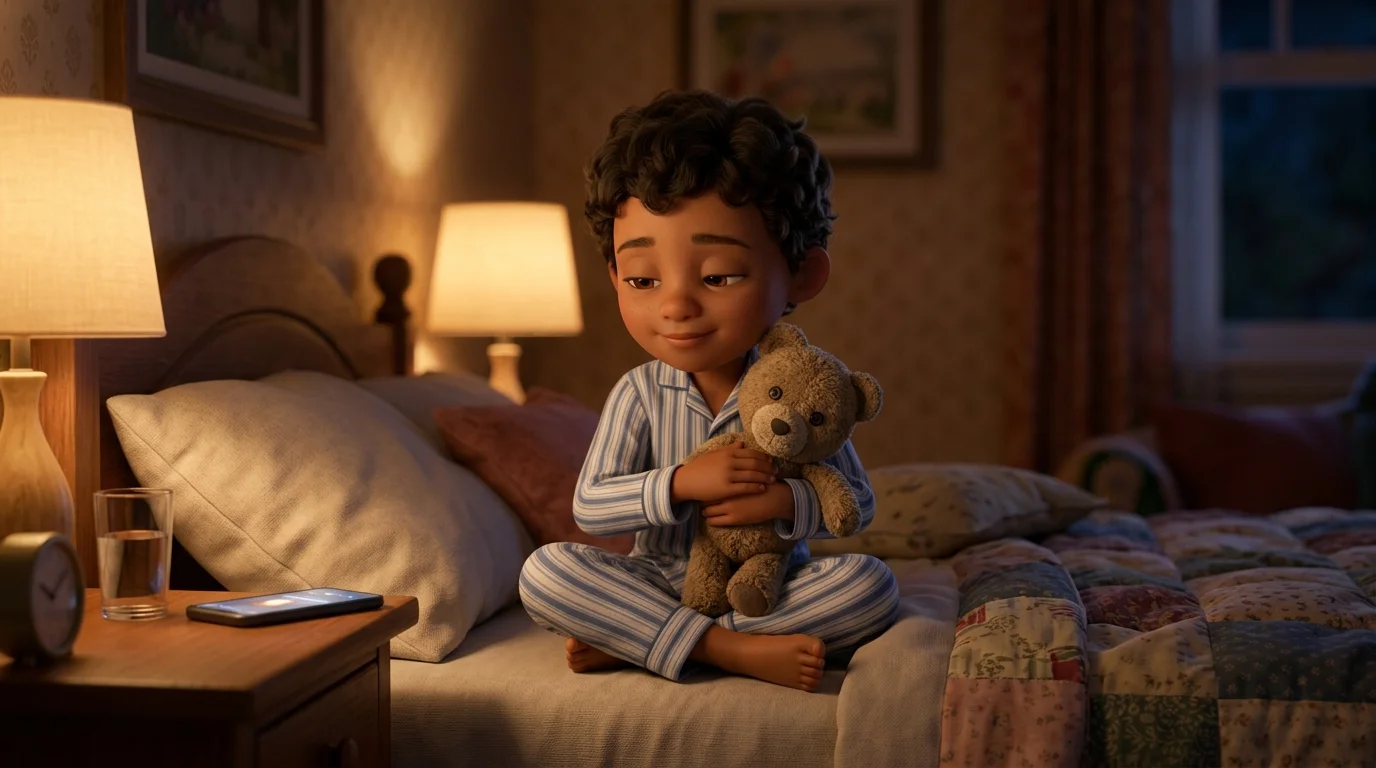
- Tell a personalised bedtime story the evening after they put their feet back in. A story where your child is the hero learning to read the ocean, greeting the waves, jumping the first one. The real day becomes a chapter of the tale.
Why a personalised story makes the difference
A generic story tells of an anonymous child afraid of water who eventually dives in. A personalised story names your child, sets the scene on the beach they know, mentions their swimsuit, their bucket, the plush toy left on the towel. With Nanou Studio you compose the story in a few taps: the hero shares your child's name, age, and outfit. The narrated voice takes over, your child hears their own name in the tale, sees in 3D illustrations a hero who looks like them greeting the wave, counting it, jumping it, walking out triumphant. Fear does not vanish in one night, it turns into a skill: reading the ocean is something you learn, and their narrated twin just proved it.
Adventure stories for the beach
Explore the adventure stories for the night the hero tames the ocean.
A six-scene canvas
Picture your child, first name Saxa, six years old, going back to the beach the morning after the big wave. Plush Rabbit stays on the towel. The mission: Saxa learns to read the ocean and jumps their first wave.
- Scene 1 · Saxa arrives at the beach, Plush Rabbit in their arms, watches the ocean from the towel.
- Scene 2 · Saxa walks up to the wet sand, waves hello to the ocean, without putting a foot in the water.
- Scene 3 · Saxa counts the waves out loud, one, two, three, learning their rhythm as they rise and fall.
- Scene 4 · Saxa holds a parent's hand and dips a toe in the foam, the wave pulls back, they laugh.
- Scene 5 · Saxa jumps over a small wave, feet leaving the sand, landing upright and triumphant.
- Scene 6 · Saxa sits back down next to Plush Rabbit, salty hair, tired smile, the ocean behind them like a friend.
Frequently asked questions
Should you force a child back in the water after a big wave?
No. Forcing reactivates the loss of control that installed the fear. Offer the sand, then the foam line, then the held hand. Your child gives permission step by step, often within two or three days.
Should you use armbands to go back into the waves?
Armbands protect against depth, not against the imbalance that dominates the surf zone. On a wave beach, prefer a held hand and a slow entry. Armbands are still useful in pools or on calm-sea days.
At what age is this fear of waves most common?
Between three and six years old, when the child is too big to be carried through the surf but too small to read the swell alone. After six, the fear unwinds naturally as motor coordination catches up. Below three, the fear is rarely verbalised but may show as refusing to approach.
When should you consult if the fear lasts?
If after two weeks of gentle returns your child still refuses any contact with water, or if the fear spreads to bath time at home, mention it to your paediatrician. One or two sessions with a child psychologist are often enough to unwind an isolated episode.
Create the story that turns the wave into a friend
You have the child, you have the beach, you have the plush toy. What is missing is the story that turns fear into a skill. Create the first ocean story on Nanou Studio.