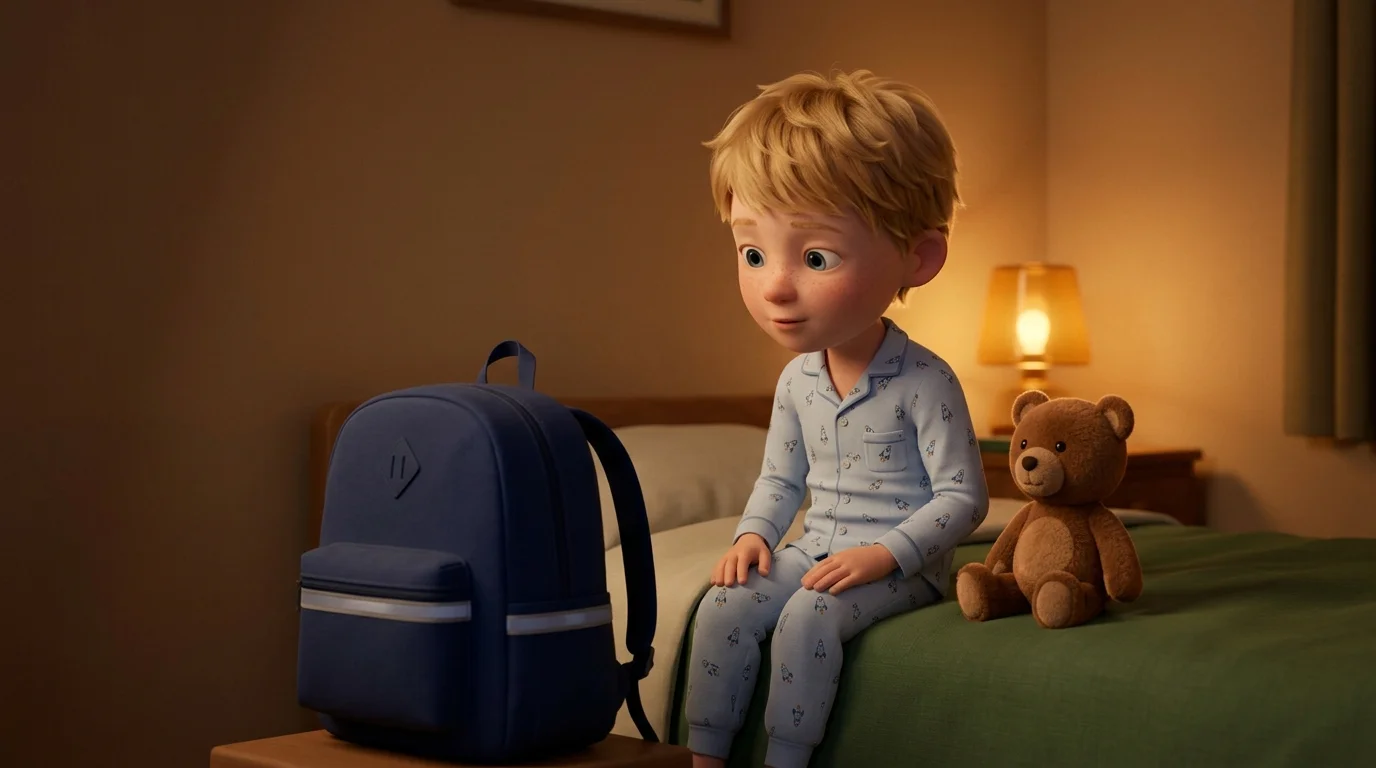
Back-to-school is prepared in June, not on 31 August
In September 2026, your child will enter preschool, Year 1, Year 3 or any other class. New room, new teacher, sometimes new school. Many parents wait the last week of August to bring it up. That is too late. The best preparation plays out gently between late June and late August, without dramatising, with everyday tools including the personalised bedtime story. This guide gives you five concrete levers to prepare your child for back-to-school in a calm way, and explains how a well-tuned story can defuse most micro-anxieties before they arrive.
Why anticipate back-to-school three months ahead
Pediatricians observe it every year: back-to-school anxieties crystallise in the last ten days of August, but they feed on doubts accumulated all summer. The more the topic has been normalised in June and July, the less weight it carries in August. The American Academy of Pediatrics resources on helping kids transition back to school describe the school transition as one of the three major stress moments of the year for a child between 3 and 10, alongside the arrival of a sibling or a move.
Anticipating does not mean buying supplies in June. It means mentioning back-to-school in ordinary conversation, opening the school topic without weighing it down, telling stories where the hero lives a successful back-to-school. Gentle repetition installs the idea that back-to-school is a normal, anticipated, almost awaited stage.
Five concrete levers that work
To prepare your child for back-to-school without stressing them, five levers work well.
- Walk past the new school once or twice in July or August, without entering, just to make the building and the neighbourhood familiar.
- Name the teacher as soon as the name is known (usually in July or August). "You will have Miss Aurora next year, like neighbour Lena."
- Rebuild the school rhythm from mid-August. Bedtime 9pm, wake-up 7:30am, evening reading, as during the school year. Not abruptly on 31 August.
- Prepare a personalised story where the hero, your named child, lives their first week of back-to-school. New classroom, new friend, quiet mission, reassuring ending.
- List together what they already know about the school. The yard, the canteen, the playground, the old friends who will probably be in the same class. The more concrete the list, the lighter the unknown.
The pediatric guidance on healthy sleep habits reminds parents that a steady bedtime ritual is one of the best anti-anxiety tools at this age. Back-to-school is just a variant of this rule.
Why a personalised story makes the difference
A generic story stages a hero your child does not know in a school that does not exist. A personalised story does the opposite. Your child carries their own first name, their future class is named, the friend they will meet again appears in the story, the teacher has a name and a face. The projection effect is immediate. Your child no longer wonders if back-to-school will go well, they have already lived it in story three or four times before the actual day.
With Nanou Studio, you compose the story in a few clicks. The hero carries their first name and their face in stylised 3D. You add the classmate who will be there (or the one you hope will be), the expected teacher, the new backpack, the scooter they will take to get there. The Family or Gentle Adventure genres work very well for this type of story. Avoid mystery and suspense, the topic calls for a peaceful narration.
Browse personalised adventures and family stories to compose the first back-to-school story.
A concrete six-scene pitch for back-to-school
Picture your child, first name Sam, who will enter Year 2 in September. Their best friend is Leo, their dog is Splash, their future teacher is Miss Aurora. Tonight's mission: Sam lives their first morning of Year 2 smoothly.
- Scene 1 · Sam puts on the new jumper, grabs the backpack, says goodbye to Splash staying home.
- Scene 2 · Sam arrives at the school, finds Leo in the yard, they spot their new classroom together.
- Scene 3 · Miss Aurora greets them at the gate with a smile, points to their table.
- Scene 4 · First classroom activity, Sam places their things in the cubby marked with their first name.
- Scene 5 · Break time, Sam and Leo find the previous year's friends, play football in the yard.
- Scene 6 · Back home, Splash waits at the door, Sam tells about the day, quiet ending.
Reassuring ending, lights down, sleep arriving. This structure also works for preschool entry (with cuddly toy and teacher), Year 1 (with first book and letter learning), Year 5 (with first project and quiz practice). The structure stays the same, the age and autonomy of the hero adjust.
Frequently asked questions
From when should I talk about back-to-school with my child?
As soon as you yourself think about it, which means in practice from late June. Not as an anxiety-inducing topic to settle, but as ordinary information to integrate. "In September you will be in Year 2, like Leo." That is enough to open the door without forcing it.
My child cries as soon as we mention back-to-school, what do I do?
Do not insist, but do not avoid either. A short mention once a week, never in negotiation tone, always in factual constatation tone. And shift the topic into a personalised story, which defuses better than direct conversation.
Should I buy supplies early to reassure?
Rather late August. Buying in June creates too long an expectation and associates school with material more than with people. The best reassurance remains known first names and faces.
Is a personalised story enough to prepare back-to-school?
No, it is one tool among five. It works very well combined with the school walk-past, the teacher's name mention, the mid-August rhythm restart, and the ordinary factual conversation.
Start preparing your child's back-to-school tonight
You have the child, you have the future class, you have the friend reunion. The only missing piece is the story that tames it all. Nanou Studio handles the text, the 3D rendering and the narrating voice in a few minutes. Create your first back-to-school story on Nanou Studio and give your child three months to settle gently into the 2026 school year.