When the costume is pressed but the stomach is in knots
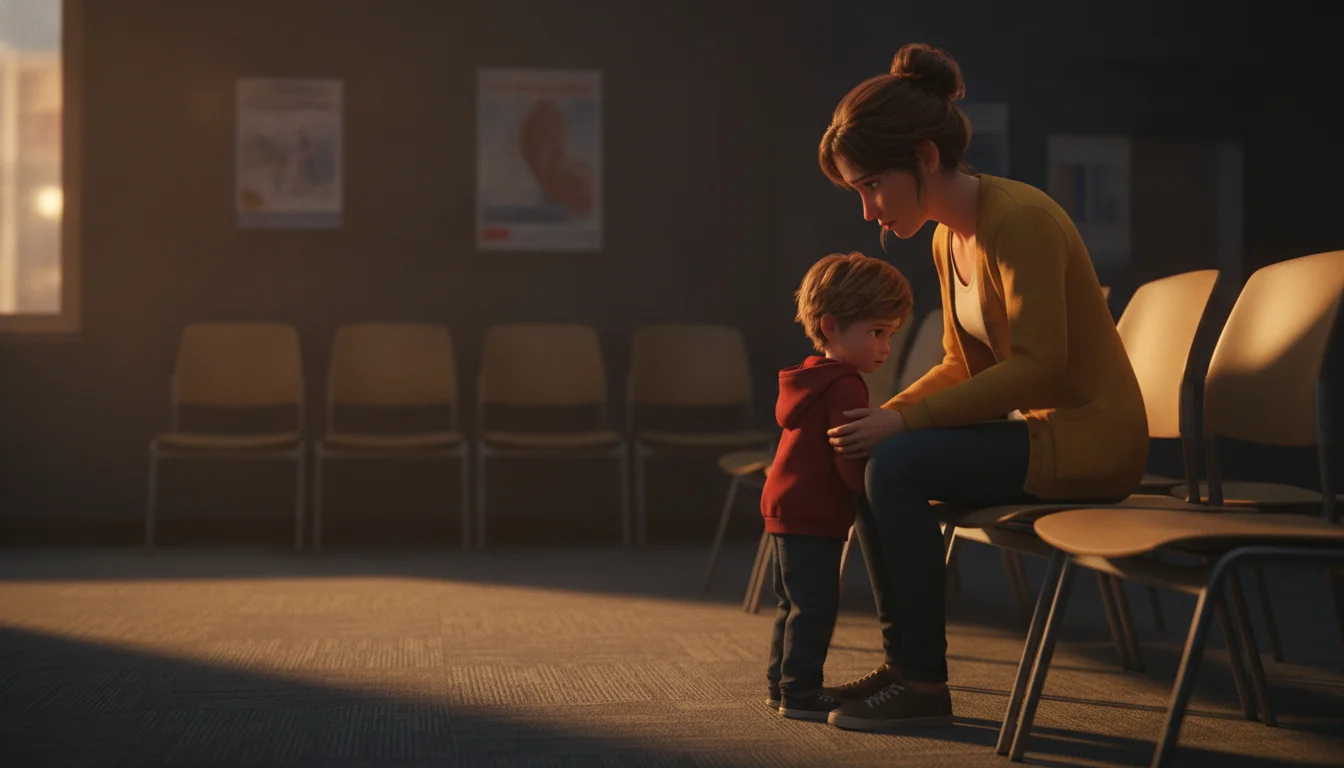
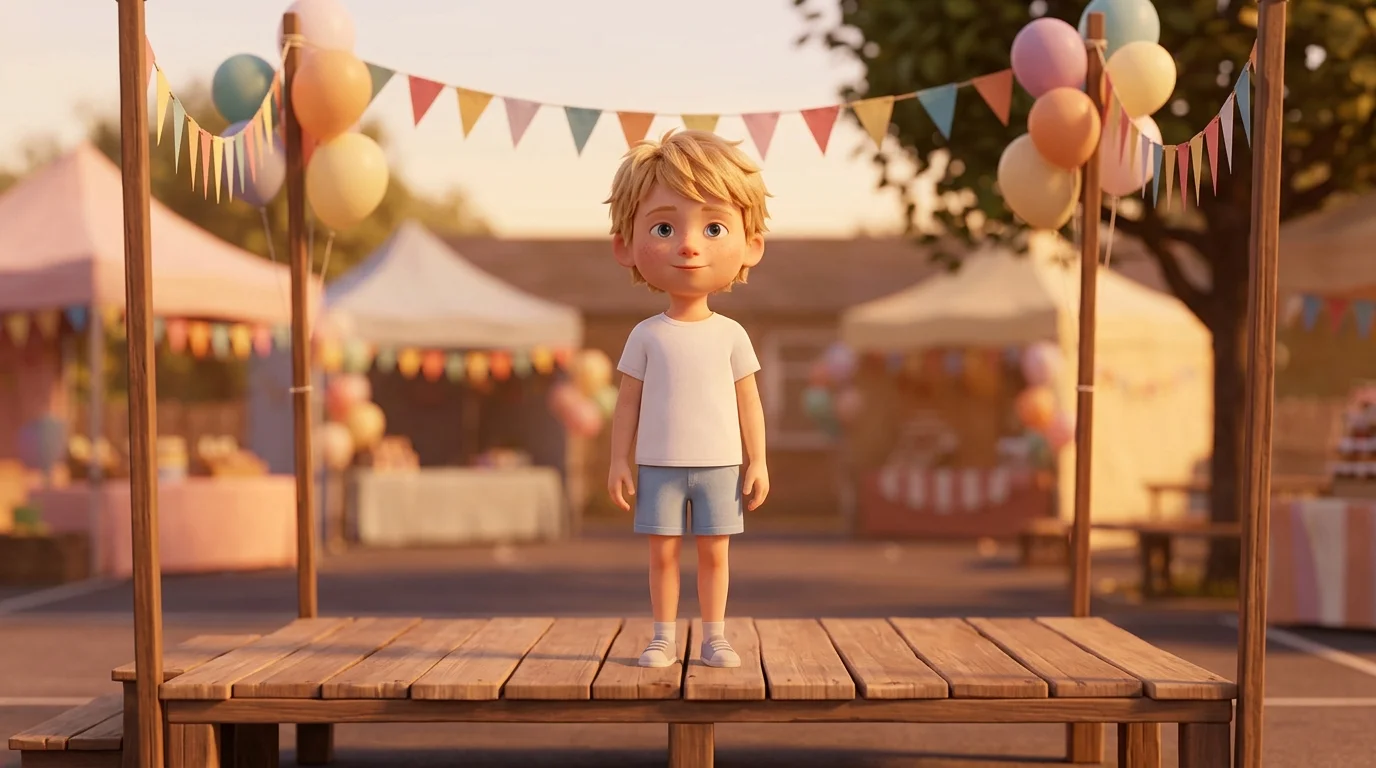
It is half past eight, you have ironed the pirate costume three times, and your child has just told you in a tiny voice that they would rather not go tomorrow. The end-of-year school fête, the moment the whole school has been preparing for weeks, has flipped into a nightmare for them: the parents watching, the squeaky microphone, the song they have to deliver alone in front of three hundred people. You know that in twelve hours you will have to be there, smile on, and you are searching for the right sentence, the gesture that disarms without belittling. This is precisely the moment when a tailor-made story can tip the evening the right way.
Why the school fête is a real milestone
The school fête stacks almost every stress trigger paediatricians describe: public exposure, a sometimes uncomfortable costume, the simultaneous presence of both sides of the extended family, and above all the fact that it is the last day before summer holidays · so the symbolic weight of "finishing the year well". The American Academy of Pediatrics on HealthyChildren.org reminds you that performance anxiety in children aged 4 to 10 typically surfaces the night before, as stomach aches, repeated requests for reassurance, or a flat refusal to attend. This is not a tantrum, it is a nervous system taking very seriously what adults consider a party. Recognising the milestone is already half of the work.
Five levers that work
- Rehearse the role at home, in the living room, costume on. Have them perform their moment three or four times in front of you, clap loudly, laugh with them if they slip up. Their brain registers that making a mistake has no serious consequence.
- Pick the costume with them, never instead of them. Even if the teacher gave instructions, let your child decide the detail that makes them proud: the scarf, the socks, the face paint. That tiny decision power cuts the puppet feeling.
- Walk through the running order minute by minute, the night before. "You arrive at two, you drop your bag in the classroom, you go to the loo with the teacher, then you wait behind the curtain." Uncertainty is what frightens most, a detailed script dissolves it.
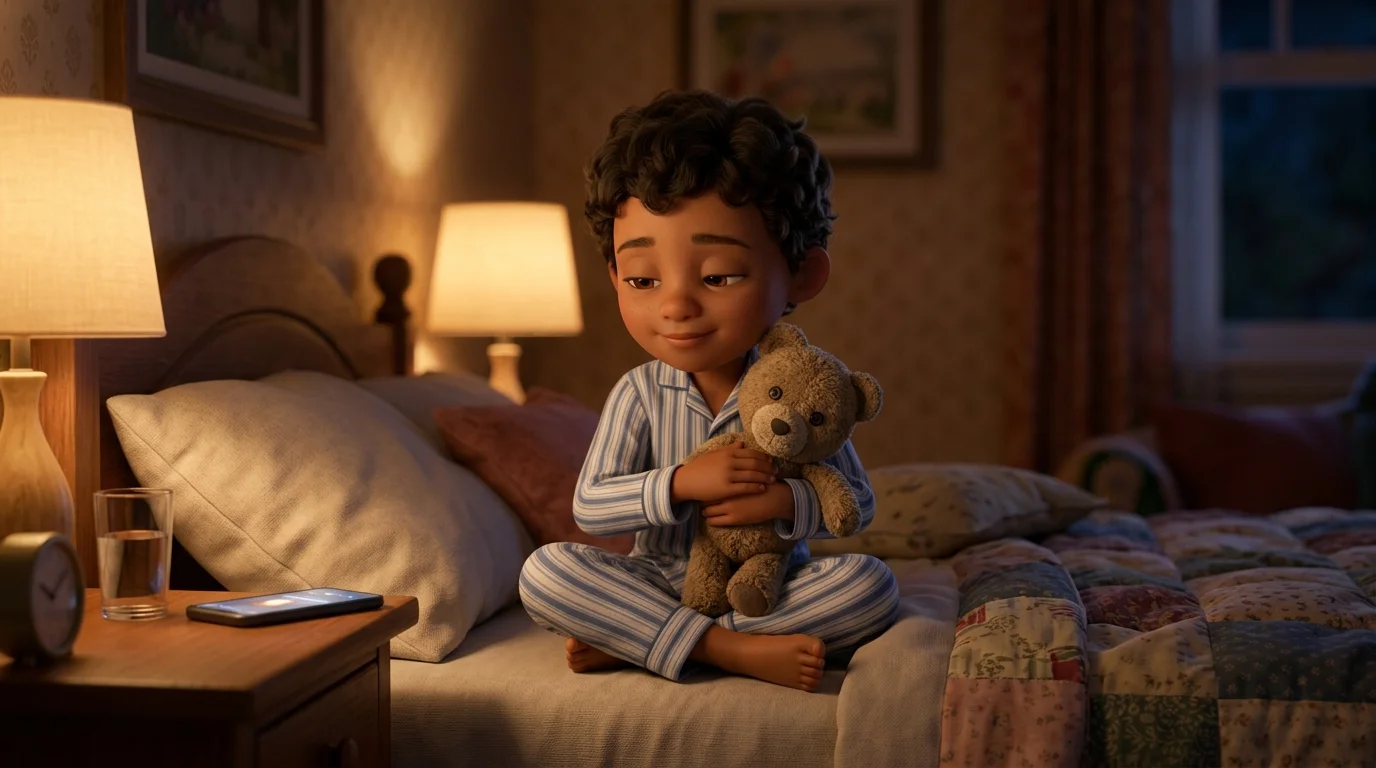
- Read a personalised story at bedtime the night before. Not a generic tale: a story where your child is the named hero who also has to face a big scene and discovers, by the end, that they come out of it taller. It is mental rehearsal dressed up as pleasure.
- Ban comparison with the sibling, the cousin or your own childhood. "When I was your age I sang without trembling" is a sentence that isolates. Prefer: "Tomorrow is your turn, and we will be in the room just for you."
Why a personalised story makes the difference
A shop-bought book tells the adventure of a brave little rabbit: your child sympathises, then turns the page. A story where the hero carries their first name, where the teacher is actually called by her real name, where the school is named and the costume described in its true colours · that one prints itself in. The child's brain processes the tale as an anticipated memory: they have, in a way, already lived the school fête and they have nailed it. The next morning they wake up with a mental trailer instead of a black hole. To build that kind of story in five minutes, you can start from our family stories that stage everyday bonds and big shared moments.
A concrete six-scene pitch
Here is the skeleton we often hand parents when they ask for a worked example. Imagine your hero is called Sam, they are six years old, and they have to sing a duet tomorrow.
- Scene 1 · Sam comes home from school with the costume in their bag and tells the cat they will not go.
- Scene 2 · The cat, who only speaks in the evening, asks why and listens all the way through without interrupting.
- Scene 3 · They decide together to rehearse in the garden, under the cherry tree, with the ants as their first audience.
- Scene 4 · Sam slips up three times and each time the ants clap anyway: they understand that a mistake does not stop the show.
- Scene 5 · On the morning of the fête, the cat slides a feather into the costume pocket as an invisible lucky charm.
- Scene 6 · On stage, Sam feels the feather, spots you in the third row, and sings. Not perfectly, but really.
Frequently asked questions
At what age does the school fête start triggering anxiety?
From around four for sensitive children, more commonly from six when the performance becomes truly public. Around nine or ten the anxiety changes shape and becomes more social, fear of peer judgement rather than fear of the stage.
Should you force a child who genuinely refuses to go?
No, but you need to understand what exactly they refuse: the stage, the costume, the noise, a grandparent in the audience? A child to whom you offer to come just and watch, without performing, almost always accepts, and often ends up taking part once on site.
When should you read the personalised story, the night before or the morning of?
The night before, at bedtime, no phone around, calm voice. Sleep consolidates what the brain has just heard and your child wakes up with the story already digested. The morning is too late, you only have time for logistics.
My child cried on stage last year, how do you avoid a replay?
Name what happened without dramatising: "Last year you cried and you still finished your song, that was brave." Your child needs to hear that you are not ashamed of that memory, otherwise they assume crying tomorrow would be a disaster in your eyes.
Tomorrow you will be proud, and so will they
The fête will pass, the costume will go back into the box, and two months of beach will stretch ahead. What will linger most is how you accompanied this passage: with a story telling them they are capable, with a hero carrying their first name, with an ending that resembles the one they will live tomorrow morning. Build their fête story in five minutes on Nanou Studio.