The evening the zucchini plate ends up on the floor
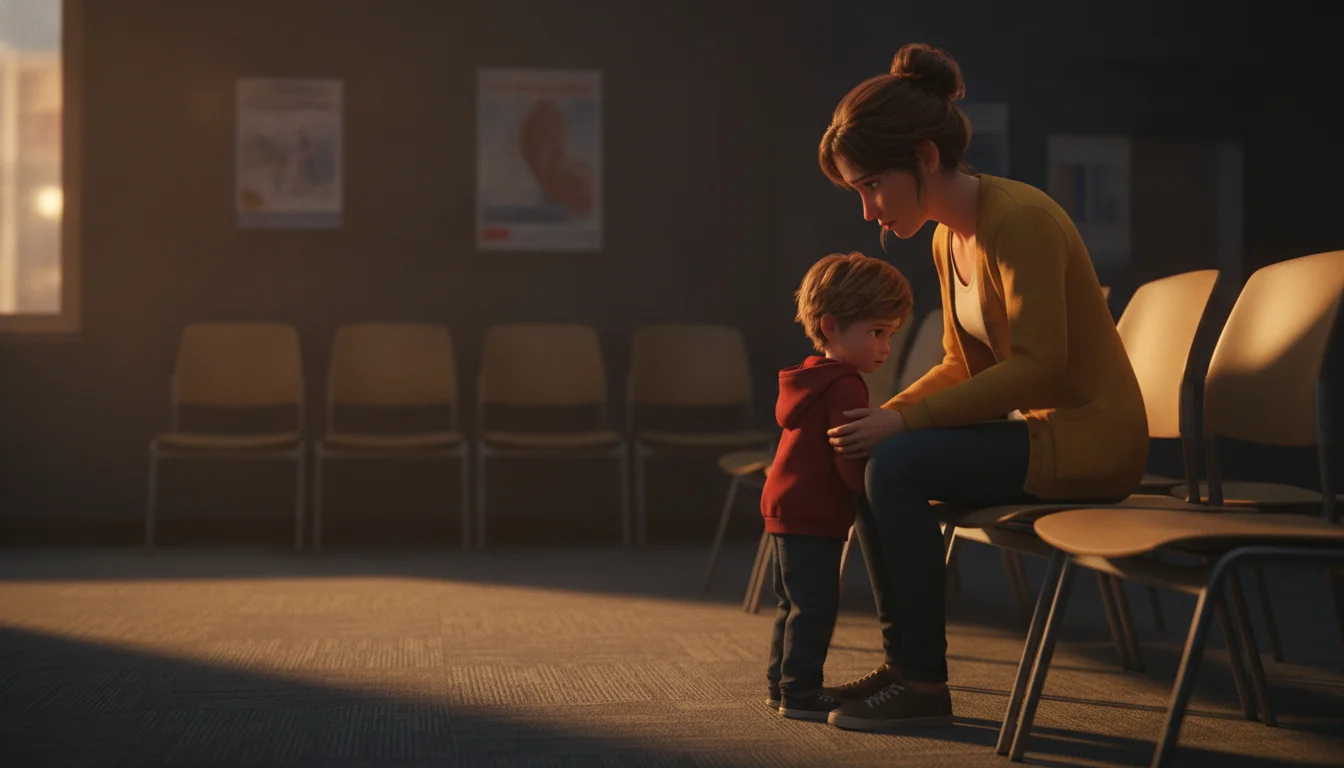
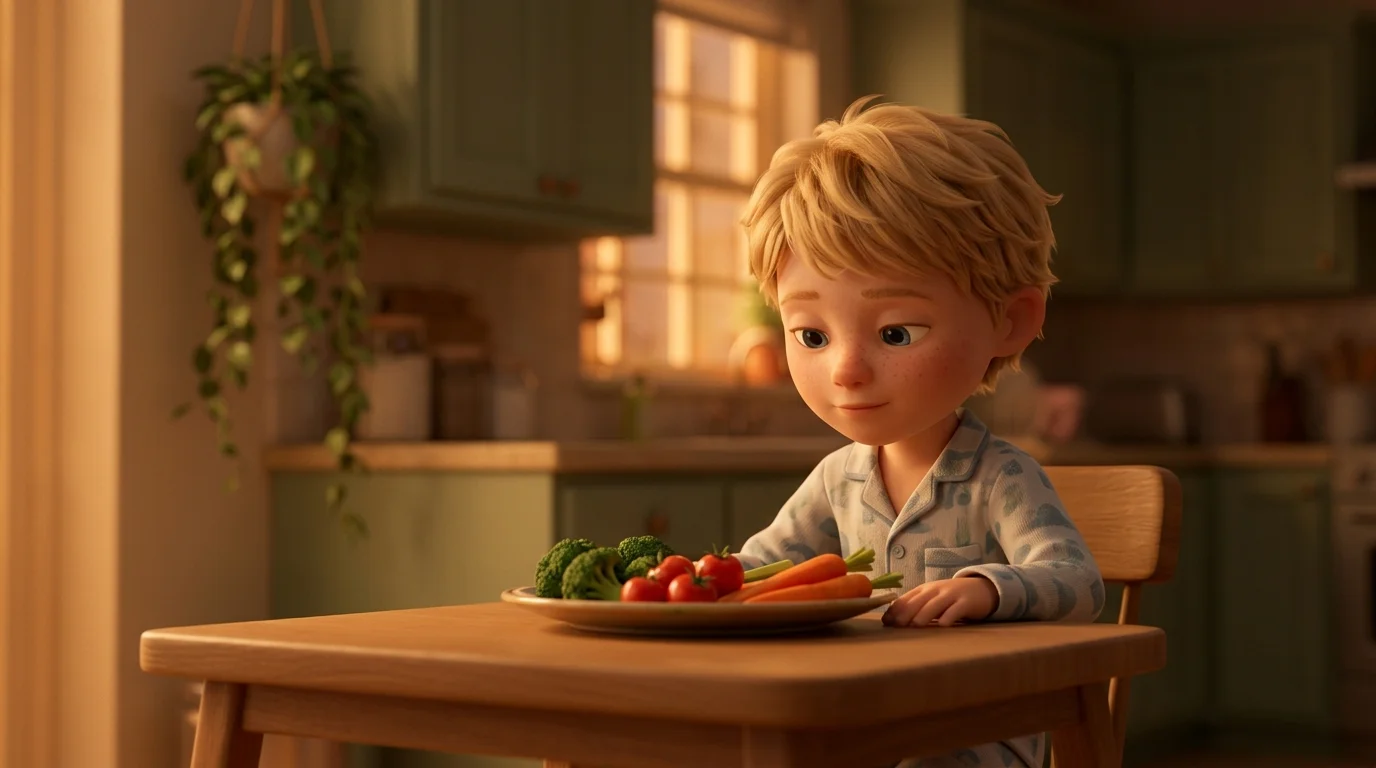
It is seven fifteen, you spent twenty minutes gently pan frying market zucchini with a hint of parmesan, and your 4 year old pushes the plate away with a dramatic pout. "It's yucky." You insist gently, your child crosses both arms, dinner becomes a standoff, your partner looks at you, you look back. An hour later, the child has nibbled three pieces of pasta and a heel of bread, and you go to bed with a vague feeling that you failed to pass on something important. This guide gives you five concrete levers that defuse the vegetable battle, and explains how one well calibrated personalized story can, starting tomorrow night, change the picture for the weeks to come.
Why food neophobia is normal between 2 and 6 years old
A child's refusal of vegetables is almost never an isolated tantrum. It is, in the vast majority of cases, a developmental stage called food neophobia, the fear of new or unfamiliar foods. The HealthyChildren.org portal, published by the American Academy of Pediatrics, reminds parents that this behavior typically emerges around age 2, peaks between 3 and 5 years old, then gradually fades around 6 or 7. At that age, the child who used to put everything in their mouth at 18 months suddenly starts sorting the plate, separating red from green, refusing anything that is not white, yellow or brown. It is a protective mechanism inherited from evolution, not a parenting failure.
Neophobia hits vegetables harder than any other food group, because bitter flavors are more present (cabbage, broccoli, spinach, endive, zucchini), because fibrous textures surprise the palate, and because green is, statistically, the color that young children associate the least with immediate pleasure. The parent's job is not to force the tasting, but to keep offering, without pressure, varying the presentation. This posture, validated by contemporary pediatric guidelines, takes a patience that you learn over time.
Five levers that work
To leave behind the dinner standoff without giving up on offering vegetables, here are five levers that work on the majority of children between 2 and 6 years old.
- Do not force, ever. Forcing a child to eat a vegetable installs a lasting disgust that outlives the neophobia phase. The pediatric rule is clear: the parent decides what and when the family eats, the child decides how much they eat.
- Offer eight to ten times the same vegetable before giving up. Research in pediatric nutrition converges on this number: it takes between eight and ten repeated exposures, without pressure, for a child to accept a new taste. Many parents stop after the second refusal, long before the learning effect can kick in.
- Cook with your child whenever possible. Washing zucchini, breaking broccoli into florets, squeezing an orange, mixing a vinaigrette: this hands on preparation turns the foreign food into a familiar one. A child who took part is three times more likely to taste, and the literature is robust on this.
- Tell a personalized story the night before, where the hero, named after your child, discovers a new vegetable and enjoys it. This imagined rehearsal works as a mental anchor that the child finds again the next day in front of their plate. Details in the next section.
- No dessert bargaining. "Finish your vegetables or no yogurt" sets exactly the wrong hierarchy: the vegetable becomes a chore, the dessert becomes the only object of desire. Serve both in the same sequence, with no conditional access.
To go further on portions, food groups and meal rhythms recommended by age, the Nutrition section of HealthyChildren.org gathers fact sheets reviewed by AAP pediatricians.
Why a personalized story makes the difference
A generic story puts a hero your child has never met in a kitchen they have never seen, in front of a piece of broccoli that does not look like the one in your fridge. The projection effort is real, sometimes pleasant, often ineffective. A personalized story does the opposite: your child finds their first name, their stylized face, their kitchen, their family, their stuffed animal around the table. When the hero shares the child's name and bites into a fresh slice of zucchini for the first time with a smile, your child identifies effortlessly, and tomorrow's tasting becomes a natural extension of the story.
With Nanou Studio, you build the story in a few clicks using the everyday elements of your child's life. The hero carries their name and a stylized rendering of their face. Brothers and sisters appear around the table, the dog sniffs under the chair, grandpa may show up to share his cook's trick. This density of familiar markers is precisely what turns an ordinary story into a behavior lever. Discover the family stories to dial in the right tone, without making it dramatic.
The format matters too. Six short scenes, one clear mission (tasting a new vegetable), a positive ending without a heavy moral. Avoid long stories, multiple plot twists or villains: this is not an adventure story, it is a quiet discovery story.
A concrete six scene pitch
Picture your child, named Sam, 4 years old, in pre K. The dog is called Splash, the older sister is Lily, the grandpa is Grandpa Mark. The story's mission: Grandpa Mark drops by with a mystery basket from the market, and hidden inside is a vegetable Sam has never tasted before.
- Scene 1 · Grandpa Mark rings the doorbell with a large wicker basket, Sam welcomes him with Splash wagging the tail.
- Scene 2 · On the kitchen table, Grandpa Mark pulls out shiny green zucchini, Sam touches them with one finger, smooth and cool.
- Scene 3 · Lily washes the zucchini with Sam, water runs over their hands, Splash watches from the chair.
- Scene 4 · Grandpa Mark shows how to slice into thin rounds, Sam holds the peeler for the very first time.
- Scene 5 · The rounds slowly turn golden in the pan, the smell spreads, Sam leans in to sniff.
- Scene 6 · At the table, Sam tastes one round, the face lights up, Grandpa Mark smiles, Splash waits for crumbs under the chair.
Calm ending, vegetable tasted without drama, hero valued without a moral lesson. This structure also works with broccoli, beetroot, endive or leek. The point is to replace the standoff with a discovery scene that your child will, without noticing, replay the next day in their own kitchen.
Frequently asked questions
At what age should I worry about a child who eats no vegetables at all?
Neophobia is very common between 2 and 6 years old and does not warrant concern as long as the growth curve stays regular and the child accepts at least one or two vegetables. If the refusal is total and persists beyond age 7, or comes with weight loss, talk to your pediatrician.
How many times should I offer the same vegetable before giving up?
Pediatric guidelines converge on eight to ten repeated exposures, without pressure and without bargaining, before concluding that a child will not enjoy a food. Most parents stop well below this threshold, so before the learning effect has had a chance to land.
Can I hide vegetables in purees or sauces?
It is useful in the short term to keep nutritional intake on track, but it does not teach your child to recognize or appreciate the taste of the vegetable. Keep offering the visible version in parallel, even in tiny portions, so the taste learning continues.
Is a personalized story enough to unlock a neophobic child?
On its own, no. Combined with shared cooking, no bargaining, and repeated exposures, yes, it helps unlock the situation for the majority of children. It is one lever among five, not a magic solution.
Launch the story that will reshape tomorrow's dinner
You have the kitchen, you have the market vegetables, you have your child's name. The one missing piece is the story that prepares the ground the night before, without pressure. Nanou Studio composes the text, the visual rendering and the narration voice in a few minutes, you just press play at bedtime. Create your first personalized story on Nanou Studio and offer your neophobic child a bedtime companion that gently prepares them, starting tomorrow, to taste the vegetable that was still resisting yesterday.