Nine in the morning on the beach, the tube comes out, your child runs off
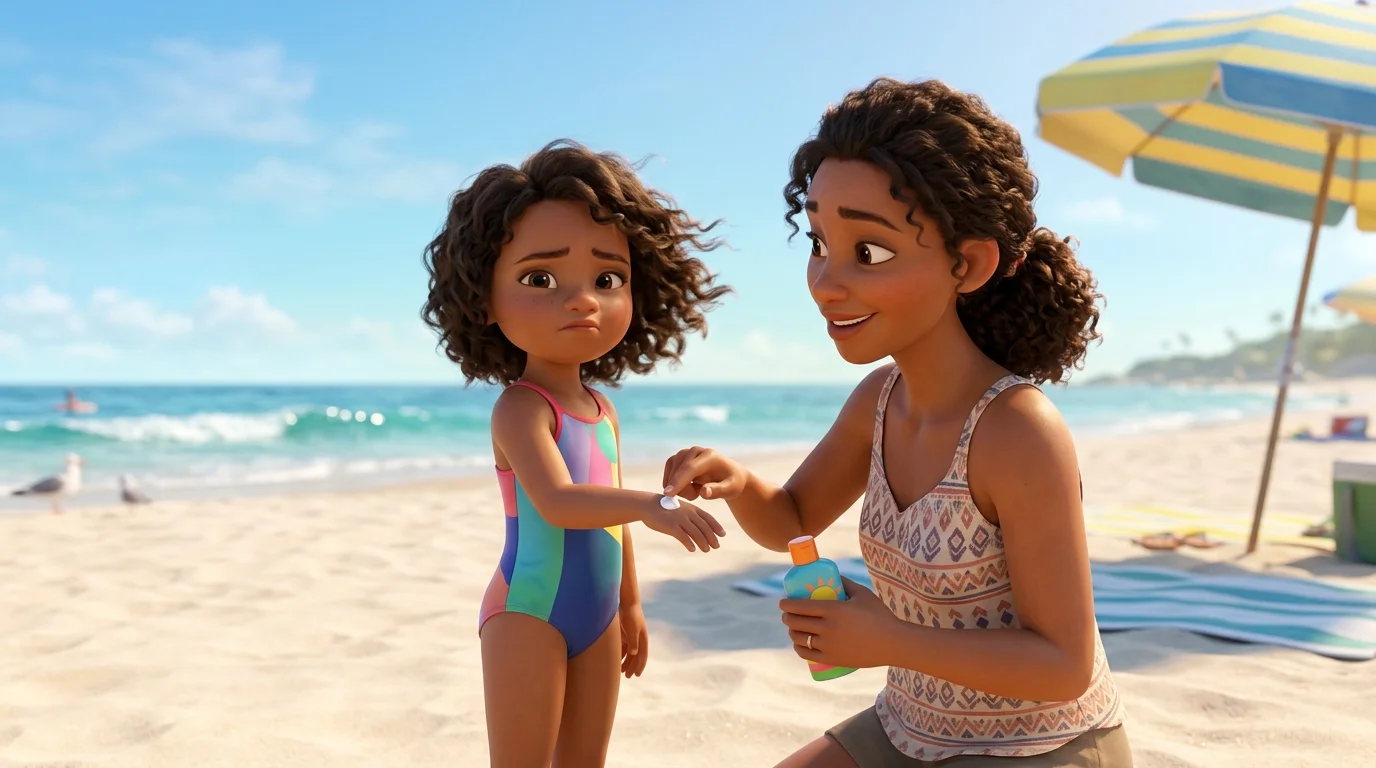
Nine ten. The towel is laid out, the umbrella is planted, the bucket and shovel come out of the net bag. You reach for the sunscreen tube and at that exact moment, your child spots the gesture and darts off toward the sea laughing. Five minutes later, tears: it stings the eyes, it sticks to the arms, it soaks the swimsuit that has barely dried. The day has hardly begun and everyone is already tense. This guide gives you five practical levers to stop the daily sunscreen fight, and explains why a personalized bedtime story the night before completely flips your child's relationship with the tube.
Why children refuse sunscreen
A four or six year old does not grasp ultraviolet radiation, does not project themselves into tomorrow's sunburn, let alone a skin cancer forty years from now. What they feel is here and now: a cold sticky texture on warm skin, a heavy perfumed smell, a tube pressing too close to the eyes. What they feel above all is a loss of control over their own body. A grown-up bigger than them grabs their arm, holds them still, spreads a substance they never asked for. The American Academy of Dermatology, on aad.org, reminds parents that under-six skin is particularly vulnerable. The health stakes are real, the strategy to hold the line must be gentle.
Five practical levers for the morning sunscreen routine
- Choose a sunscreen without aggressive fragrance, ideally mineral, alcohol free, in a soft tube that will not drip into the eyes. A kid-sized tube, a color they recognize, a texture that glides rather than clings.
- Let your child apply part of it themselves. Arms, belly, legs, everywhere they can reach. You take care of the back, neck, ears and face. The shared gesture gives them back the autonomy they were claiming by running away.
- Ritualize it before breakfast, not on the spur of the moment at the beach. Sunscreen goes on in pajamas, calmly, before the cereal. Once at the beach, only touch-ups remain. The morning ritual removes the surprise, and surprise is the first source of refusal.
- Explain the sun with simple words. No statistics, no threats. "The sun shines very hot, the cream is a little invisible blanket on your skin. Without it, the skin turns red and it hurts. With it, you can play all morning long." One sentence, two images, that is enough.
- Tell a personalized invisible shield bedtime story the night before. This is the most powerful lever. The child falls asleep as the hero of an adventure where sunscreen is a power. The next morning, the tube is no longer a chore, it is the next chapter of last night's story.
Why the personalized story makes the difference
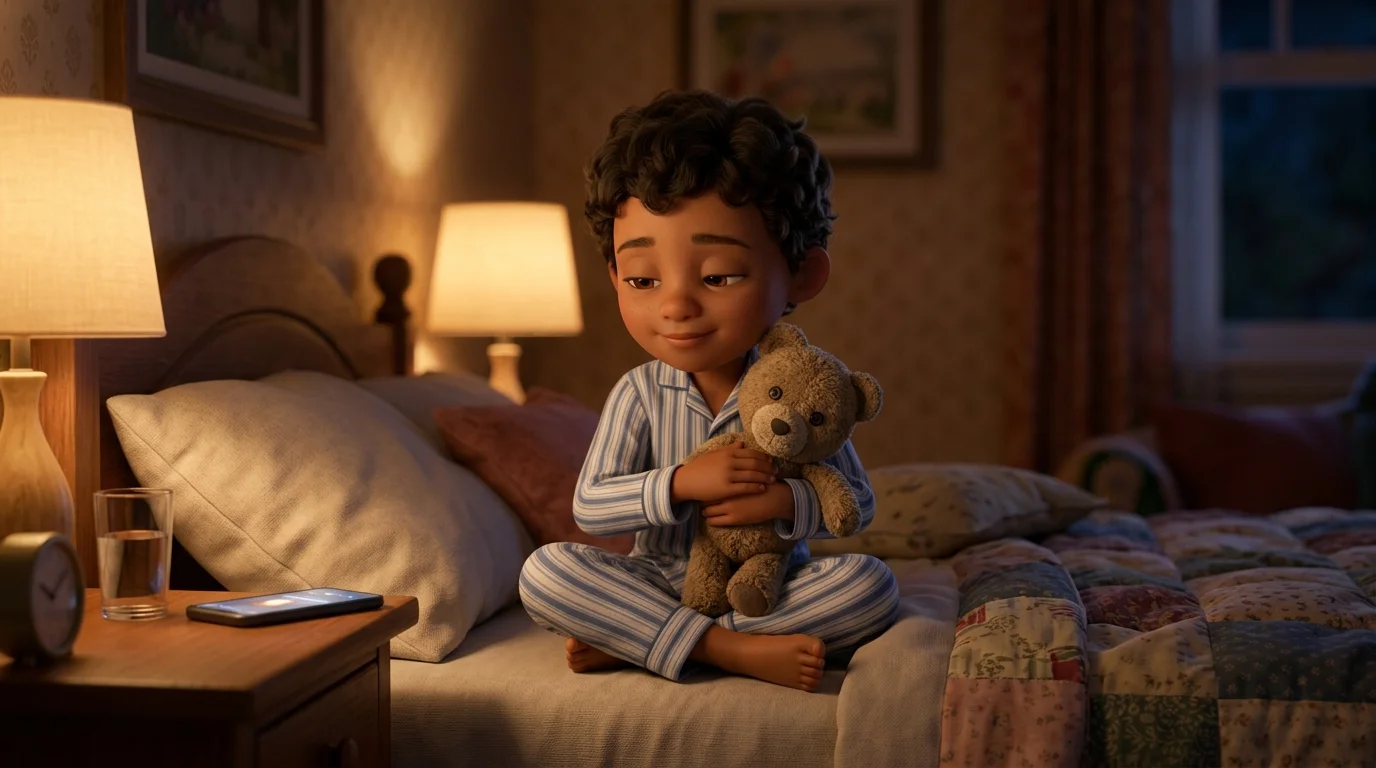
A generic story mentions a child who puts on sunscreen and goes to the beach. A personalized story names your child, sets the scene in their own room, describes their swimsuit, their plush, the color of their bucket. The hero receives a magical invisible shield from a wizard, and the only way to activate that shield is to spread a cool substance on the skin. With Nanou Studio you compose the story in a few clicks, the narrated voice takes over, your child sees in 3D illustrations a hero who looks like them defeating a Sun-dragon thanks to their shield-cream. The next morning, when you pull out the tube, they no longer see a parental constraint, they see last night's superpower.
Adventure stories for summer
Discover the adventure stories for the evening that gets ready for a day at the beach.
A six-scene canvas
Picture your child, first name Saxa, five years old, on holiday by the sea. Bunny plush travels along. The mission: Saxa receives an invisible shield from a wizard and must activate it to defeat the Sun-dragon.
- Scene 1 · Saxa sleeps in the holiday bedroom, a wizard appears in a dream and places a small shiny tube on the bedside table, the Invisible Shield.
- Scene 2 · At dawn, Saxa finds the tube by the bed. The wizard explains: every patch spread protects one region of the body against the Sun-dragon.
- Scene 3 · Saxa spreads a hazelnut-sized drop on the arms, one on the belly. The skin glows briefly with a blue light, invisible to others, clearly visible to Saxa.
- Scene 4 · The Sun-dragon climbs into the sky and breathes its heat. Saxa runs on the sand, the shield holds, the skin stays cool.
- Scene 5 · On the shoulders, one forgotten patch. Bunny plush points at the gap, Saxa returns to the tube, the patch lights up in turn.
- Scene 6 · The Sun-dragon calms down at noon. Saxa joins the parent in the umbrella shade, a big hug seals the victory, the shield stays active all afternoon.
Frequently asked questions
What time should sunscreen be applied on a child?
At least twenty minutes before exposure, so ideally at home or at the rental, before even leaving for the beach. Applying on the spot exposes bare skin during the absorption window. Morning in pajamas, calmly, remains the best slot.
Spray, tube or stick, which one to choose?
The soft tube is the most versatile, it enables the shared gesture and avoids spray drift into the eyes. The stick is handy for the face and ears. The spray works well for quick touch-ups on the sand, but avoid spraying near the face.
Do you need to reapply after swimming?
Yes, systematically, even with a water-resistant label. Sand, towel and salt water abrade the protective film. A fresh layer every two hours and after every swim is the rule. It is also the perfect moment to replay the shield ritual with the child.
If the child keeps refusing anyway, what do you do?
Never drop protection, adjust the format. Certified UV-protective tee shirt, wide-brim hat, umbrella shade between eleven in the morning and four in the afternoon. Sunscreen complements those three barriers, it does not replace them. Combine all four and refusal loses its vital stake.
Prepare the story that arms tomorrow's beach morning
You have the child, you have the tube, you have the sand waiting. What you are missing is the story that turns refusal into a superpower. Create your first invisible shield story on Nanou Studio.