Bedtime story for a 3-year-old: what really works (and why 3 minutes is often enough)
At three, your child asks you for the same story for the third time, and you wonder if you've missed something. You haven't: this is exactly what they need at this age. This article unpacks four things in order · what shifts cognitively in your child at three, what length to aim for, how to choose the hero, and why telling stories aloud is less tiring when you prep a little. No miracle promises, no secrets the early-childhood folks don't want you to know.
What changes inside your 3-year-old's head
Three things any parent observes day to day, and that shift the narrative game.
The "me" really sets in. Your child recognizes themselves in the hero if the hero looks like them. Not symbolically, literally: their name, their face, their dog Biscuit. At three, this is the window where personalization produces the sharpest surprise effect. It's also the age where they start saying "I" with authority in play. The story should reflect that identity-building.
Repetition is a tool, not a tantrum. Asking for the same story 15 nights in a row is normal memory consolidation. Your child tests the details, checks that they hold over time, predicts the lines. You can lean into the request (rather than tolerate it) by occasionally slipping in small variations that surprise them: "and tonight, Bunny was wearing his red scarf, remember?" That activates working memory.
Attention is short but deep. Between 3 and 8 minutes on average, but with sharper concentration than at 18 months. Past 6 or 7 minutes, your child checks out quietly. A short intense story beats a long one recited mechanically.
What length to aim for (and why 3 minutes is often enough)
Let's bust the "longer is better" myth. At three, here are the windows that work.
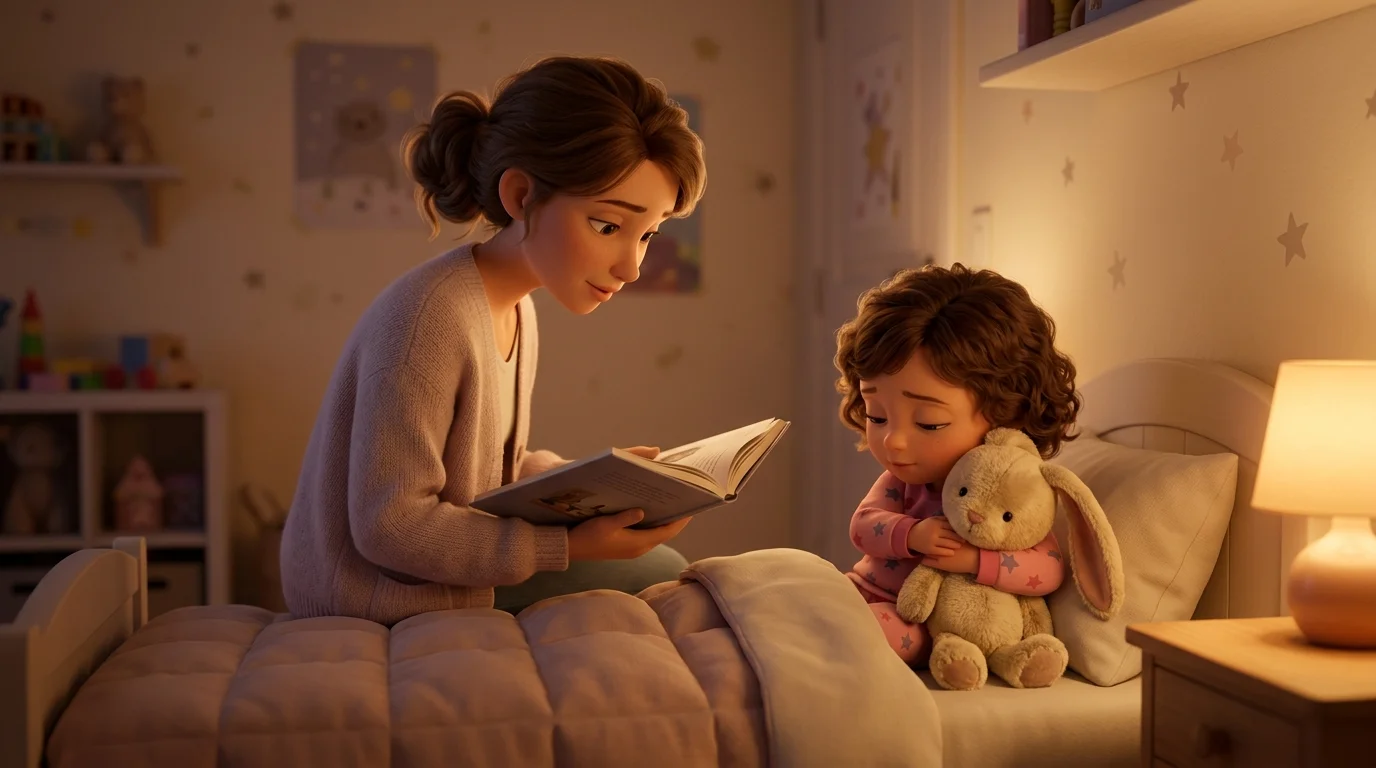
3 to 5 minutes for bedtime. Your child holds attention without checking out, and the story stays in the emotional memory that helps them fall asleep. Past that, you lose them.
6 to 8 minutes during the day if your child is parked on the couch, calm, fully alert. Never more. That's their brain limit, not their motivation limit.
Beyond that, you exhaust yourself and they tune out in silence (the "they're sitting still so they must be listening" line is misleading · they often pretend to listen long after they've drifted off).
At three, the right format is: three short scenes, a clear hero, a small tension that resolves, a reassuring ending. That's it.
That's exactly the Nanou Studio format in 3-year-old mode: 3 scenes (roughly 3 to 4 minutes), calm narration, a natural-sounding voice, stylized illustrations that help your child visualize without overwhelming their attention. Six-scene stories (around 6 to 7 minutes) are tuned for the 5 to 7-year-old crowd.
Picking the hero: name, lovey, or your child themselves?
This is the heart of the question at three. Three options that work, ranked from simplest to most powerful.
The classic hero (a friendly rabbit, a generic little girl, a gentle dragon). It works, it's reassuring, your child can attach to the character. But it doesn't create lasting attachment beyond the book, and every new book starts from scratch.
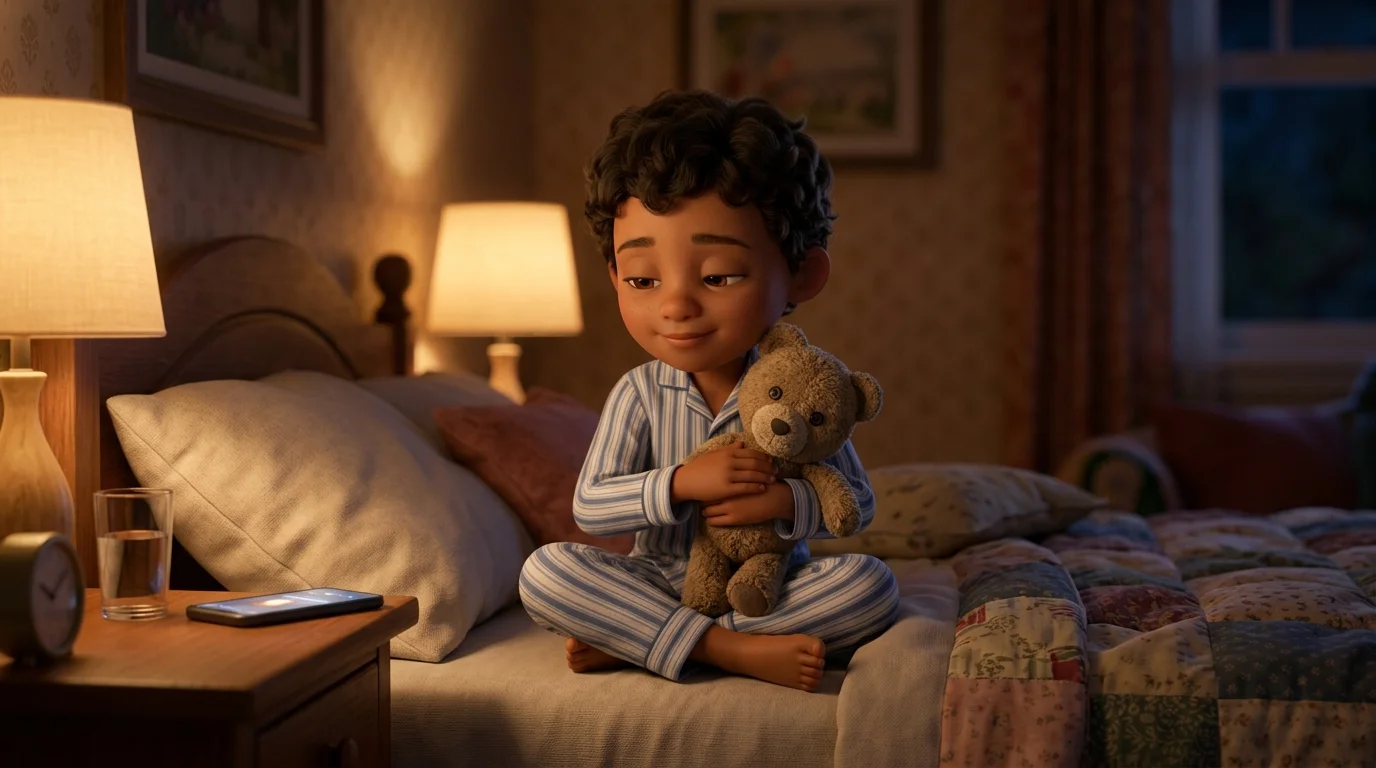
The lovey as hero. Excellent at three, because it's the transitional object of choice. Your child already projects a lot onto their lovey (they talk to it, tuck it in, comfort it). Turning Bunny or Lovey into the hero of a story validates them and reinforces the bond with the comfort object. A concrete idea to try: before reading the bedtime book, invent three sentences with the lovey, "and what did Bunny do this afternoon?" You open a little theater your child will love.
Your child themselves as hero. The most emotionally dense format at three. When your child hears their name in the story, sees a face that looks like theirs in the illustrations, and finds their dog or older sibling in the cast, attention spikes and the demand for re-reads explodes (see point 1). It's the age where total personalization produces the biggest surprise effect · more than around 5 or 6, when kids start putting a little distance between themselves and the hero.
If you want to test the effect, Nanou Studio creates in 5 minutes a story where your 3-year-old is the hero, with their name, their age, their stylized face, their named lovey, and their friends. You can try one free story on Nanou.
Telling stories without burning out: 4 habits that change everything
Four practical tips, real ones, no fluff:
- Read slowly, especially proper names. At three, your child needs 2 seconds to register the hero's name. If you rush, it slides past and the identification effect is lost. Pause on names, articulate the personal details clearly.
- Modulate your voice across three characters max. Beyond that, your child tunes out and you exhaust yourself. A low voice for the "big one" (Dad, the wolf, the principal), a soft voice for the hero, a neutral voice for narration. Stop. No need to be a voice actor, just consistent.
- Accept the interruption. The child who breaks in to ask "why is the wolf sad?" is learning. Answer in one sentence, pick back up. Don't dramatize the interruption, don't scold. It's a sign they're following along.
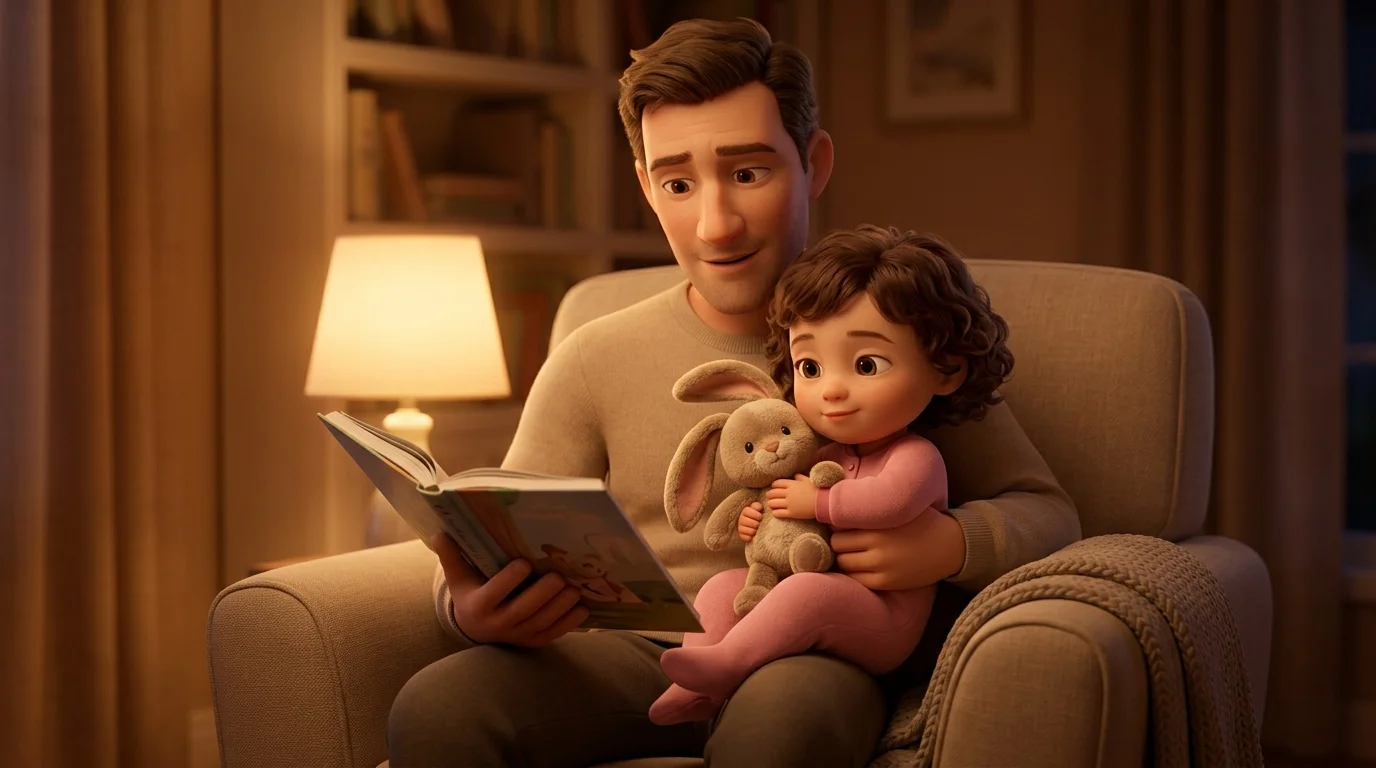
- Keep 1 or 2 "refuge" stories you know by heart. On nights when you have nothing left, you go through them without reading and your child can't tell (and that's totally fine). At three, the timbre of your voice matters more than the exact wording of the book.
Bonus for the truly rough nights · if you're toast, an app can read the story for you while keeping your child as the hero. Nanou Studio's natural-sounding voice is calibrated for 2 to 4-year-olds: steady rhythm, gentle intonation, no jarring sounds that would wake them up. It's not an obligation, it's an option for the nights when your voice is gone.
Three traps specific to 3-year-old stories
Three pitfalls to recognize so you don't break the ritual's effect:
- A story that's too exciting before bed. A superhero fighting a villain, a high-speed chase, loud sounds on every page · works during the day, not at night. At bedtime, aim for soothing levers · a lost object that's found, a friend coming over to play, a pet drifting off to sleep.
- A story that ends badly. At three, your child doesn't yet have the emotional security to digest a sad or open ending. Every bedtime story should resolve positively. Not a saccharine happy ending necessarily, but stability restored.
- Vocabulary that's too advanced. Your child understands many more words than they use, but if there are too many unknown words in five minutes, they tune out. Stick to vocabulary you actually use day to day at home.
Frequently asked questions
Why does my 3-year-old always want the same story?
Because it serves them at this age. Repetition consolidates narrative learning: story structure, anticipation, cause and effect. Your child tests the stability of the world by asking again. The more a story is requested, the more useful it's been. It's not a tantrum or a lack of curiosity. Accept the repetition, slip in a new story occasionally so you don't burn out as the parent.
How long should a story be for a 3-year-old?
3 to 5 minutes for bedtime, 6 to 8 minutes during the day max. Past that, attention drifts silently and the story loses its soothing power. If you want to tell something longer, split it across two nights · that's more effective than one long stretch.
My 3-year-old can't sit still during the story. Is that normal?
Very common, not a problem. At this age, some kids need to move in order to listen (counterintuitive but documented). If they're moving but anticipating lines or reacting to keywords, they're following along. Don't force them to stay still. If they're clearly not following and drifting away, shorten the story or change format (maybe they prefer the story told without a book in hand).
Should we alternate parent-told stories and recorded narration at three?
Yes, alternating works well. The parent's voice is still central for the bond (the shared ritual), but an app that reads the story for you can take over on exhausted nights or during car rides, without breaking the ritual. Pick a natural-sounding voice calibrated for 2 to 4-year-olds, not a robotic one that recites everything in the same tone.
In short
At three, a story that works is 3 to 5 minutes, a hero who looks like your child (ideally with their name and their lovey), three structured scenes with a reassuring ending, and your voice modulating across three characters max. Personalization hits its peak effect at this age · it's the window where your child literally wants to be the hero.
If you want to try it without commitment, your 3-year-old's first story is free on Nanou Studio, no credit card required, and every story is automatically available as a printable book (a PDF you download and print yourself).