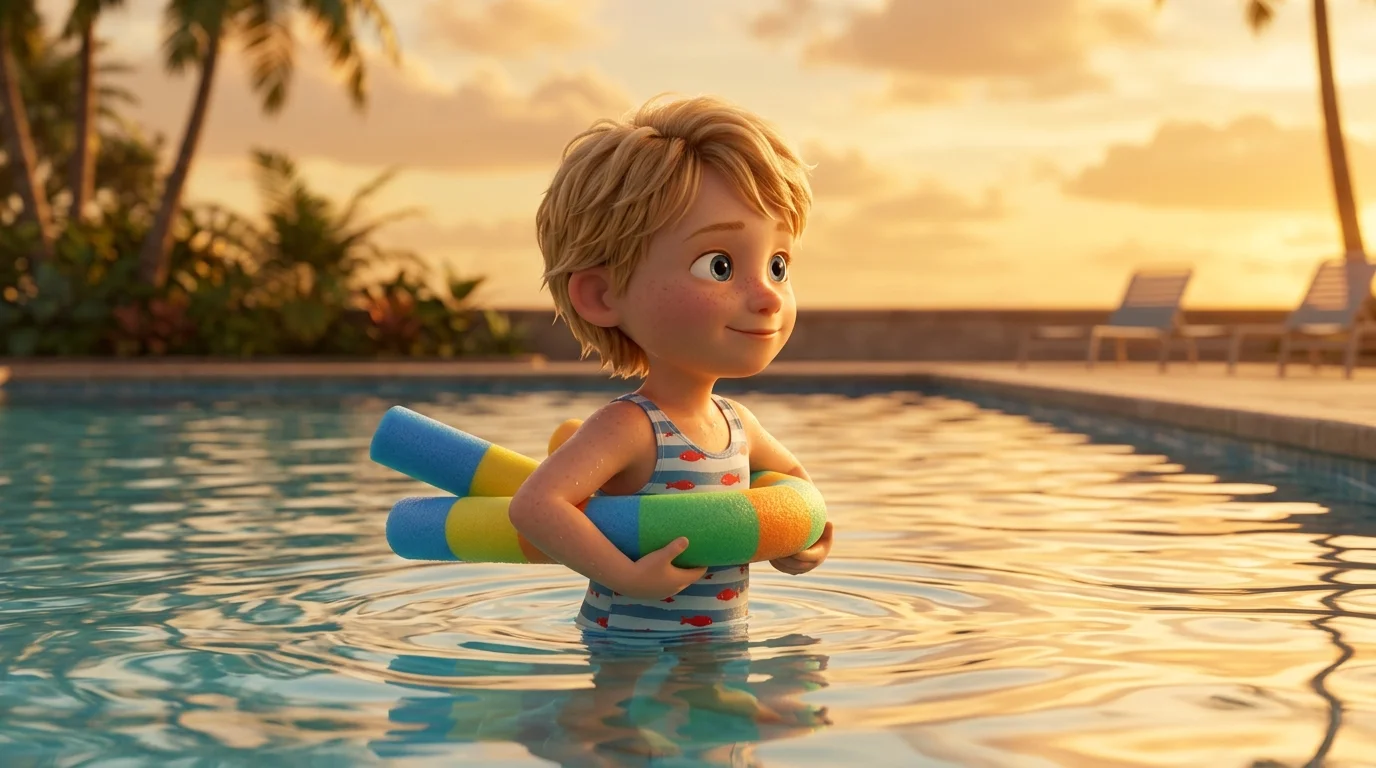
When your child wants to stand alone in the water
Mid-June, your child has tamed the pool and now wants to swim without help. Noodle, swimsuit, armbands are ready, but the shift to autonomous swimming is a milestone. This guide gives you five concrete levers to accompany the first strokes and explains how a personalised story told the evening before can give your child the confidence they need.
Why learning to swim is a milestone
Autonomous swimming combines breath control, body balance and trust in flotation. The American Academy of Pediatrics resources on water safety and learning to swim remind parents that swim learning between 5 and 8 is built across many short sessions rather than one forced long session.
Five levers that work
- A patient calm swim instructor who adapts the pace to your child.
- Pool noodle or swim belt rather than armbands, which keep on the surface without blocking the legs.
- Short 30-minute sessions several times a week rather than one long one.
- A personalised story the evening before the session where the hero, your named child, swims their first strokes.
- No comparison with an older sibling or a friend who already swims.
Why a personalised story makes the difference
A generic story talks of a hero swimming in an unknown pool. A personalised story names your child, sets the scene at the local pool, mentions the swim teacher. With Nanou Studio you compose the story in a few clicks. The narrated voice tells how the hero floats, gains confidence, makes the first autonomous stroke.
Browse personalised adventures to prepare the session.
A concrete six-scene pitch
Picture your child, first name Sam, 6 years old, learning first strokes. Noodle in the bag. The mission: Sam does ten metres independently.
- Scene 1 · Sam puts on the swimsuit, walks into the shallow end with the noodle.
- Scene 2 · Sam holds the noodle under the arms, kicks the legs, moves forward.
- Scene 3 · The swim teacher suggests letting go for a few seconds.
- Scene 4 · Sam lets go, feels carried, kicks harder.
- Scene 5 · Sam does ten metres alone, beaming smile.
- Scene 6 · Sam comes home, proud, tells about the session, evening settles gently.
Frequently asked questions
From what age learn to swim?
Water familiarisation from 1, first real strokes between 5 and 7 for most children. Tempo varies by temperament.
Noodle or armbands?
Rather noodle or swim belt, leaving legs free and teaching the right body balance. Armbands block posture.
How many sessions to know how to swim?
Between 8 and 15 sessions of 30 minutes for most children between 5 and 8, spread over several weeks.
Is a personalised story enough to learn to swim?
No, but combined with a patient instructor and short sessions it accelerates confidence.
Prepare the story that will give the boost
You have the child, you have the pool, you have the noodle. The missing piece is the story that gives the confidence. Create the first swim story on Nanou Studio.