Why the bedtime routine changes everything
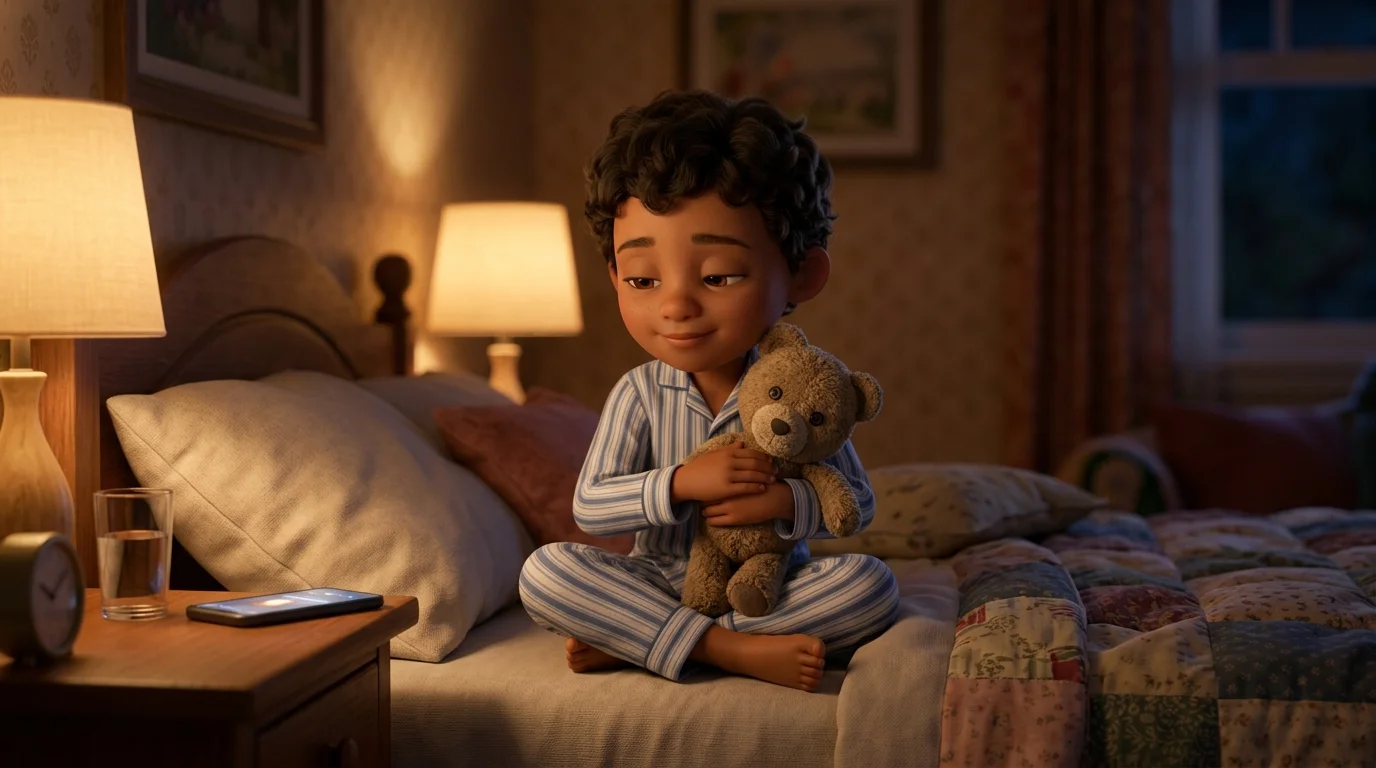
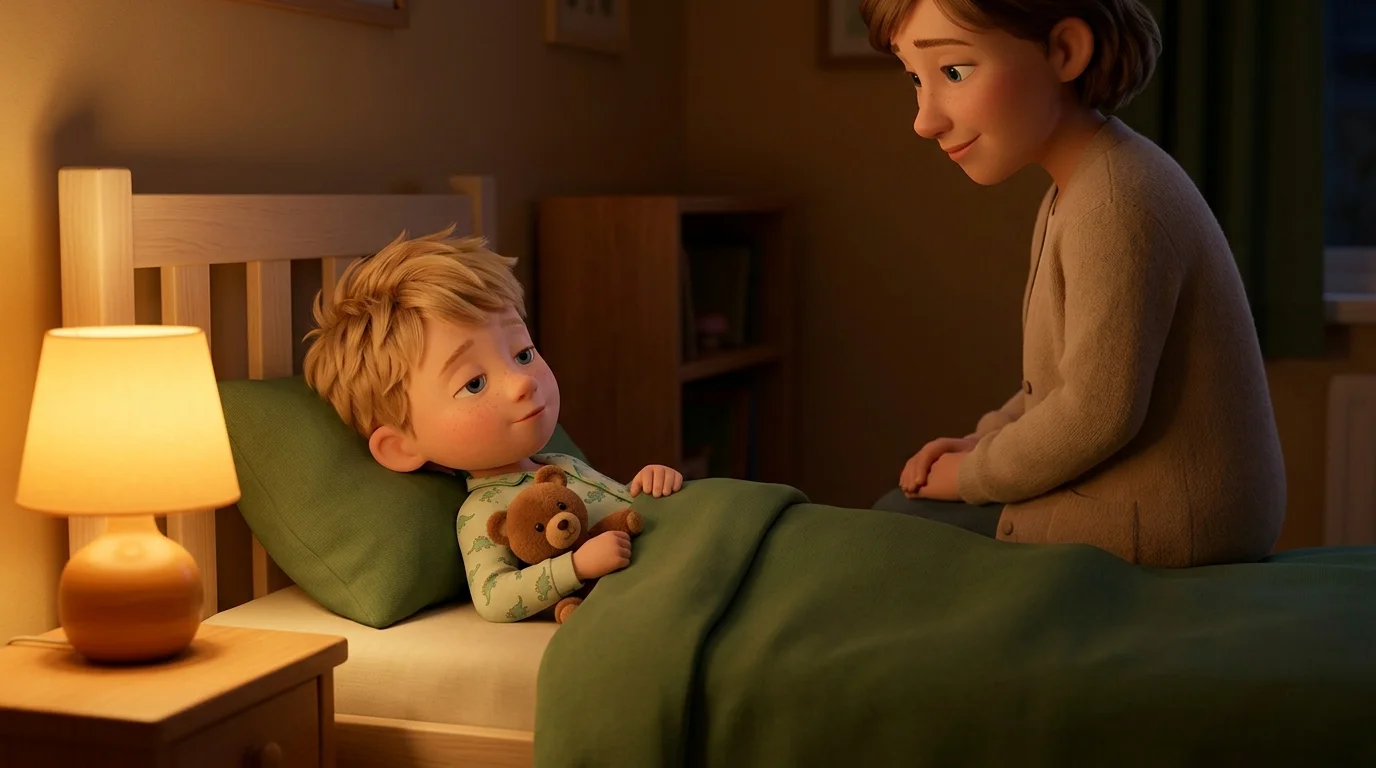
A softly lit bedroom, fresh pyjamas, one last hug, a calm story, a door that closes without noise. When a bedtime routine is well tuned, your child drifts off in fifteen minutes and the whole house breathes. When it is poorly tuned, the same half-hour turns into a marathon of negotiations, glass-of-water requests and small pretexts to push sleep away. This guide shows you how to build a short, steady, soothing bedtime routine, and how a personalised story well placed in the sequence can become the pivot that holds the whole routine together.
What a bedtime routine must actually deliver
A bedtime routine is not just a list of tasks to chain together. It performs three precise functions. First, it signals your child's brain to switch from activity to rest. The same gestures, in the same order, in the same light, gradually trigger melatonin production. Second, it secures the emotional bond. The evening separation, even brief, is a real ordeal for a child between 2 and 7. A steady routine turns separation into a reassuring transition. Third, it offers a relational anchor. Five minutes of story time with a focused, present parent weigh more than an hour of distracted presence during the day.
The American Academy of Pediatrics resources on healthy sleep habits remind parents that a short, predictable, screen-free wind-down is the first pediatric response to the most common falling-asleep difficulties between 2 and 8 years.
The ideal five-step structure
A routine that works fits in thirty to forty-five minutes, watch in hand. Here is the canonical sequence, to adapt to your child's age.
- The switch signal ten minutes before the routine itself. You dim the living room lights, cut the screens, lower your voice. No bedtime instructions yet, just a change of atmosphere.
- The bathroom pass: toilet, teeth, hand washing. Always in the same order, two minutes flat.
- Pyjamas in the bedroom, not in the bathroom. It immediately marks the bedroom as the end-of-day place and shortens the path to bed.
- The personalised story in bed, single light from an amber night lamp. This is the emotional heart of the routine, the moment your child is waiting for.
- A gentle exit: a final hug, a ritual sentence ("I love you, see you in the morning"), the door closing without noise. No promise to return, no "if you call I will come back".
This sequence avoids three classic traps. It does not leave the child managing the transition alone. It limits room changes that re-ignite attention. And it places the story right before the separation, at the moment its soothing effect is strongest.
Browse family stories and personalised adventures to wrap your routine around a story in which your child is the named hero.
Adapting the routine to your child's age
The skeleton stays the same from 2 to 8, but durations and content shift. The pediatric guidance on healthy sleep habits reminds parents that a 2 to 4 year old needs a short, very repetitive routine with little variation. At this age, three scenes of story are plenty, around four to five minutes of narration. The comfort toy takes a central role, the night light stays on through the night.
From 5 to 7, the routine can stretch a little. Six scenes of story work well, about nine to ten minutes. The child argues with the narration, negotiates a bit, but accepts the structure if it is stable. The night light can dim progressively.
From 7 to 8, the routine simplifies on the surface. Your child wants to look independent, but still needs the relational anchor. The personalised story can become a longer format, with a slightly more independent hero and a slightly more complex mission. The point is the gesture, not the length.
The key role of the personalised story
A generic story fills the slot, but does not create specific attachment to the routine. A personalised story, in which your child carries their first name, their bedroom, their dog Splash, their cuddly Bunny, their best friend from school, turns the slot into a unique moment. Your child looks forward to the bedtime story because it speaks about them. That positive anticipation is precisely what holds the whole routine together.
With Nanou Studio, you compose the story in a few clicks with the everyday building blocks of your child's life. The hero carries their first name and their face in stylised 3D. You choose the genre based on their mood, you adjust the length based on their age, you press play on the narrating voice. The voice takes over, all you have to do is sit beside the bed.
You can also vary genres to avoid weariness without breaking the routine structure. Adventure on Monday, family on Tuesday, comedy on Wednesday. The routine stays the same, only the story shifts.
Three traps to avoid in your bedtime routine
Three mistakes come up often and weaken even the most carefully built routine.
- Stretching the routine to "make up" for a busy day. Beyond forty-five minutes, the soothing effect reverses, your child enters over-stimulation, and falling asleep moves further away.
- Mixing screens and story. A video glimpsed in the minutes before the story almost cancels the soothing effect. Cut screens one hour before.
- Leaving the room with a conditional promise ("if you call I will come back"). The promise creates an expectation, the expectation feeds the call, the call restarts the wakefulness. Prefer a ritual sentence and an unconditional exit.
A concrete forty-minute routine example
Picture your child, first name Lou, 5 years old, in reception. Their cuddly is Bunny, their dog is Splash. It is 8:00 pm, dinner is done.
- 8:00 · you dim the living room lights, cut the TV and the tablets, lower your voice.
- 8:10 · you accompany Lou to the bathroom for toilet and teeth, two minutes flat.
- 8:15 · you head to the bedroom, Lou puts on the pyjamas. Bunny is already on the pillow.
- 8:20 · you switch on the amber night light, turn off the ceiling lamp, Lou slides under the duvet.
- 8:25 · you start the Nanou personalised story, six scenes, nine minutes. Lou follows, the narrating voice takes over.
- 8:34 · the story ends on a reassuring note, you give a last hug, you say "I love you, see you in the morning", you leave without noise.
- 8:40 · Lou is asleep.
Forty minutes of routine, ten of margin. Exactly the comfortable window for a 5 year old.
Frequently asked questions
How long should a bedtime routine last?
Between thirty and forty-five minutes for most children between 2 and 8. Beyond that, the soothing effect reverses. Shorter than that, the brain has no time to switch to rest mode.
Should the steps always come in the same order?
Yes, predictability is precisely what makes the routine effective. You can vary story content or genre, but the order of steps stays stable.
My child refuses certain steps, what do I do?
Rather than negotiating every evening, pick two or three non-negotiable steps (pyjamas, teeth, story) and be flexible on the rest. A short, held routine works better than a long, contested one.
Should the personalised story always be the last step?
Ideally yes, because it is the most soothing step. Place it right before the final hug and the exit, in the single light of the night lamp.
Build the bedtime routine that will truly settle your child
You have the sequence, you have the timings, you have the cuddly and the dog. The only missing piece is the story that acts as the pivot. Nanou Studio handles the text, the 3D rendering and the narrating voice in a few minutes, all you have to do is press play at bedtime. Create your first personalised story on Nanou Studio and give your child a bedtime routine they look forward to, evening after evening, that gently slides them into sleep.